
Under Texas law, an adopted adult can inherit from adoptive parents, but after the 2005 amendment to Texas Family Code § 162.507, the adopted adult generally cannot inherit from or through biological parents by intestacy. That bright-line rule matters when a family is grieving, because the answer can change whether an estate passes to the adoptive family line or stops at the biological side.
A lot of families only discover this after a parent dies, a sibling starts asking questions, or a stepparent adoption was finalized years ago and nobody revisited the estate plan. The law is compassionate in some ways, but it's also strict. If the family wants a different result, the estate documents have to say so clearly.
Understanding Inheritance Rights After Adult Adoption in Texas
A grown child who was adopted by a stepparent or close relative often feels like the legal papers should confirm what the family has lived for years. Then a parent dies, there's no will, and everyone suddenly wants to know who counts as an heir. In Texas, that question turns on whether the person is an adopted adult and whether the estate is going through intestacy, which means there was no valid will controlling the property.

For an adopted adult, Texas treats the adoptive family as the legal family for inheritance purposes under intestacy. That means the adult may inherit from and through adoptive parents as though they were a biological child, while the biological family line is generally cut off unless a will or other estate-planning tool says otherwise. The practical result is simple, even if it feels emotionally complicated, the adoption creates a new legal heirship path and closes the old one.
Practical rule: if there's no will, Texas follows the adoption decree and the statute, not family memory or private promises.
That's why families who have blended households, step-parent relationships, or long caregiving histories should not leave inheritance questions to chance. If you want a deeper overview of how adoption changes property rights, this guide on how adoption affects inheritance rights in Texas is a helpful companion to the legal rule.
Many readers ask a painful but fair question. If a biological parent never stopped loving the adopted adult, why wouldn't that child still inherit automatically? Texas answered that question in a very specific way in 2005, and the next section breaks down exactly how.
How Texas Law Treats Adopted Adults and Inheritance
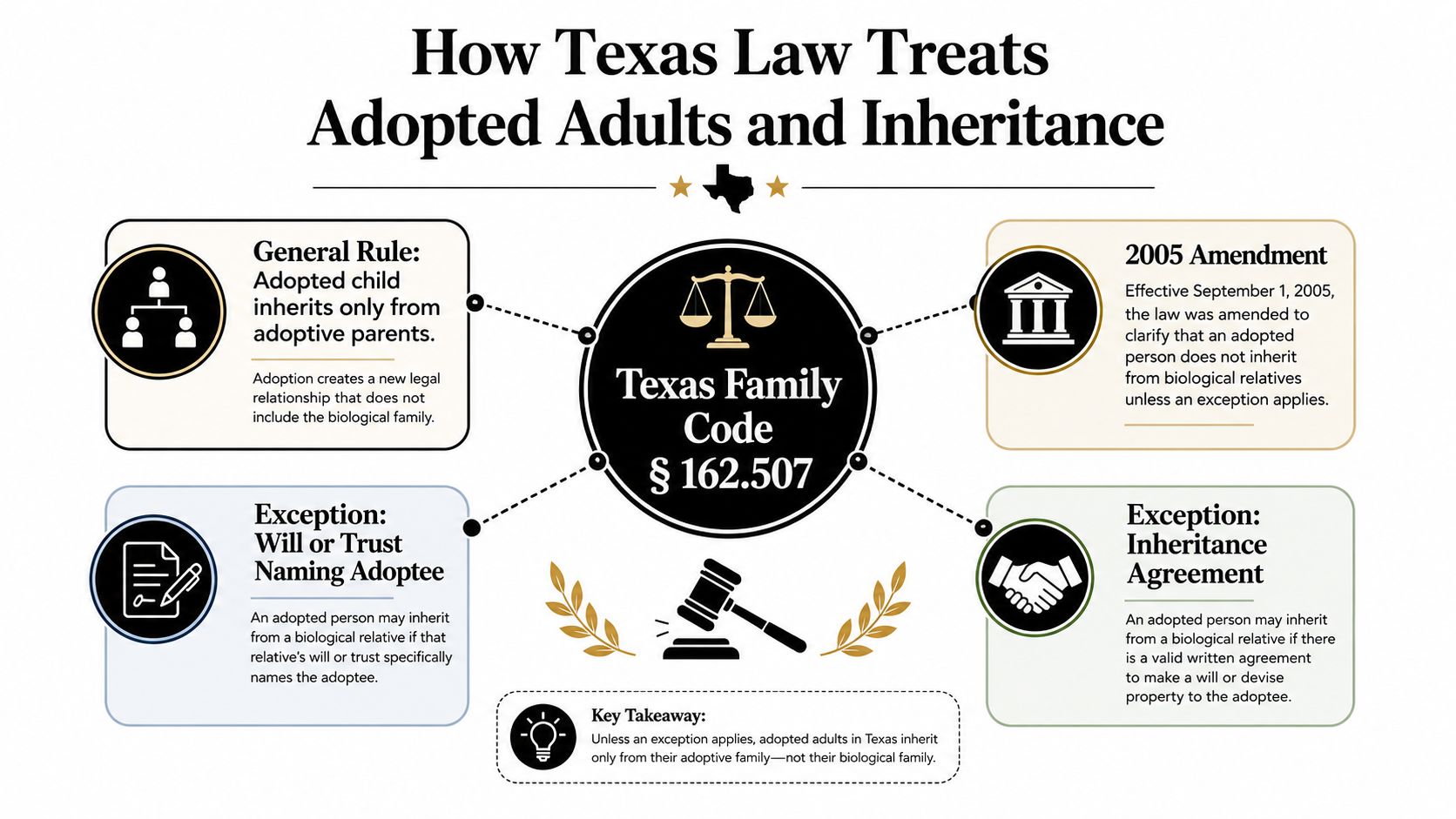
Texas Family Code § 162.507 is the key statute here, and it draws a clean line. Under that rule, an adopted adult is treated as the child of the adoptive parents for inheritance purposes, and the biological parent generally cannot inherit from or through the adopted adult. The adult adoptee also generally cannot inherit from or through the biological parent under intestacy rules. The statute's practical effect is reciprocal, once the adult is adopted, the adoptive family gains full intestacy heirship, and the biological family loses it.
The biggest turning point was the 2005 amendment enacted by the 79th Legislature. Before that change, Texas law was more permissive. After the amendment, the statute was rewritten to make the prohibition on inheritance from biological parents explicit, which is why the rule is now much clearer than it once was.
A plain-English way to think about it is this. Intestate succession is the default set of inheritance rules that applies when someone dies without a will or leaves property that the will doesn't cover. If your family doesn't create a written plan, Texas fills in the blanks. For an adopted adult, Texas fills those blanks by looking to the adoptive family line, not the biological one.
The state's adult-adoption guidance and Texas Law Help materials describe the same basic result, adopted adults can inherit from and through adoptive parents, but they no longer inherit from or through biological parents under § 162.507. That's why adult adoption in Texas is not just symbolic. It changes legal heirship in a direct and lasting way.
You can also see the rule reflected in the state's adult-adoption resource, Adult Adoption in Texas, which focuses on how one adult legally adopts another and why the process is often simpler than people expect. The legal effect still carries real weight, especially when families later deal with probate.
Why the age cutoff matters
Texas adult-adoption law starts at 18 or older, and that age line matters because adult adoptees are treated differently than younger adopted children. For estate purposes, the law gives adult adoption a very defined effect. It creates heirship in the adoptive family, but it does not preserve automatic heirship in the biological family.
Once the adult adoption is final, the safest assumption is that intestate inheritance runs through the adoptive line only.
Families often ask whether a judge, a relative, or even a long-standing understanding can override that result. Not by itself. If someone wants a different outcome, the estate planning documents need to say so. A good starting point is understanding the adoption process itself, which is also covered in how to adopt an adult in Texas.
Adopted Minors Versus Adopted Adults Under Texas Inheritance Law
Texas does not treat every adoption the same way, and that's where many families get tripped up. A minor adopted into a family is usually viewed as fully integrated into that new family for inheritance purposes. An adult adoptee, by contrast, faces a much sharper cut in the biological family line because of the 2005 amendment.
The practical difference
For minors, Texas materials and academic commentary describe a more flexible structure. An adopted child can inherit from adoptive parents, and in some situations may still inherit from biological parents depending on whether parental rights were terminated and what the court order says. For adults, the statute is much stricter. Once the adult adoption is final, the adoptive family becomes the intestate inheritance path, and the biological family generally does not.
| Inheritance Rights: Adopted Minors vs. Adopted Adults in Texas | Adopted Minor | Adopted Adult (18+) |
|---|---|---|
| Inherit from adoptive parents | Yes | Yes |
| Inherit through adoptive family | Often yes | Yes, under intestacy |
| Inherit from biological parents | Sometimes, depending on rights termination and court order | Generally no under intestacy |
| Effect of 2005 amendment | Not the key rule | Central rule |
| Best tool to preserve biological-family inheritance | Court order or estate planning | Will, trust, or beneficiary designation |
The table helps because the emotional assumption is often, “If the family is still close, the law must reflect that closeness.” Texas law doesn't work that way for adult adoption. It uses a legal cut-off, and that cut-off is tied to age 18 and the 2005 statutory change.
This distinction matters in families with both adopted minors and adopted adults. A parent may assume all adopted children are treated identically. In reality, the legal result can differ based on age at adoption, the terms of the court order, and whether the person died with a valid estate plan. A family considering whether guardianship or adoption is the right path may want to compare the two through legal guardianship vs adoption in Texas.
Family planning note: if there's a blended household with both younger and older children, the same wording won't always protect everyone the same way.
That's why attorneys spend time looking at the actual family structure, not just the label of “adopted child.” A minor may still have inherited ties that an adult adoptee no longer has, and that difference can shape everything from probate to family peace.
Exceptions and Estate Planning Tools That Preserve Inheritance
Texas intestacy law is strict for adult adoptees, but it doesn't trap families. A parent, biological or adoptive, can still control where assets go with the right documents. The key is that these tools work outside intestacy, so they can preserve a gift to an adopted adult even when the default statute would not.
Tools that can carry a parent's intent
A valid will can name an adopted adult directly, which is the cleanest way to leave a specific gift. A trust can do the same, and can also add structure if the family wants assets managed over time. Beneficiary designations on life insurance, retirement accounts, and payable-on-death bank accounts can also pass property directly to the named person, outside the probate rules.
For families worried about privacy and control, protecting your privacy with a trust is a useful resource because it explains why trusts can be more discreet than a will in some situations. The point isn't to avoid family communication. It's to make sure the legal form matches the family's real wishes.
An inheritance agreement can also help in some situations when family members want to formalize what they intend to happen. That can be especially important in blended families, where one side of the family expects one result and the other side expects another. A written agreement doesn't replace every estate document, but it can support a clearer plan.
If you're still deciding whether a guardianship arrangement or adoption better fits your family's goals, this comparison of guardianship and adoption in Texas can help you see how the legal relationship changes over time. For adult family formation, some readers also want a simple explanation of adult adoption in Texas and how it changes the legal family tree.
A will can fix a lot, but it only works if it's signed, clear, and updated after life changes.
The safest takeaway is that Texas law gives you tools, but it won't guess your wishes. If a biological parent wants an adopted adult child to inherit, that intent has to be written down. If an adoptive parent wants to treat all children equally, the documents need to say that with care and precision.
Real-Life Scenarios for Stepparent and Kinship Adoptions
A stepparent adoption often starts with love, not law. A stepfather may have raised a child from grade school through adulthood, or a grandmother may have stepped in when a parent couldn't. By the time the adult adoption is finalized, the family usually feels complete, but inheritance questions can still surface when property needs to pass.
A stepparent who raised the child
Say a woman was adopted at 19 by the stepmother who raised her after years of caregiving. If the stepmother dies without a will, Texas intestacy law treats the adult adoptee as the child of the adoptive mother. If the biological mother dies intestate, the adult adoptee generally does not inherit through that biological line. The legal result may surprise people who still see everyone as “family,” but the statute is focused on legal status, not sentiment.
A grandparent or aunt in a kinship adoption
Kinship adoptions can feel even more emotional because the relationship often already exists before the papers are signed. A grandfather may have helped raise a grandson who later becomes an adopted adult for stability, identity, or estate planning. Once the adoption is final, Texas inheritance law follows the adoptive relationship. The biological side no longer controls intestate inheritance unless a separate estate document preserves that connection.
A blended family with competing expectations
The hardest cases often involve both sides of the family. One parent may assume the adopted adult will “still be included” by birth relatives, while the birth relatives assume the adoption left family ties intact because they all stayed close. That assumption can lead to conflict when the probate court applies § 162.507 and the outcome doesn't match the family's expectations.
Families often disagree most loudly when no one left a written plan.
That's why the law can feel harsh even when the family relationship is warm. Texas isn't judging anyone's closeness. It's applying a default inheritance rule. The fix is usually not a courtroom fight, it's a better estate plan.
Steps to Protect Inheritance Rights for Your Family
The fastest way to reduce future conflict is to handle inheritance planning while everyone is healthy and clear-headed. In adoption matters, that means looking at the legal relationship, the estate plan, and the beneficiary forms together. A family can do everything right emotionally and still create a legal mess if the documents are outdated.
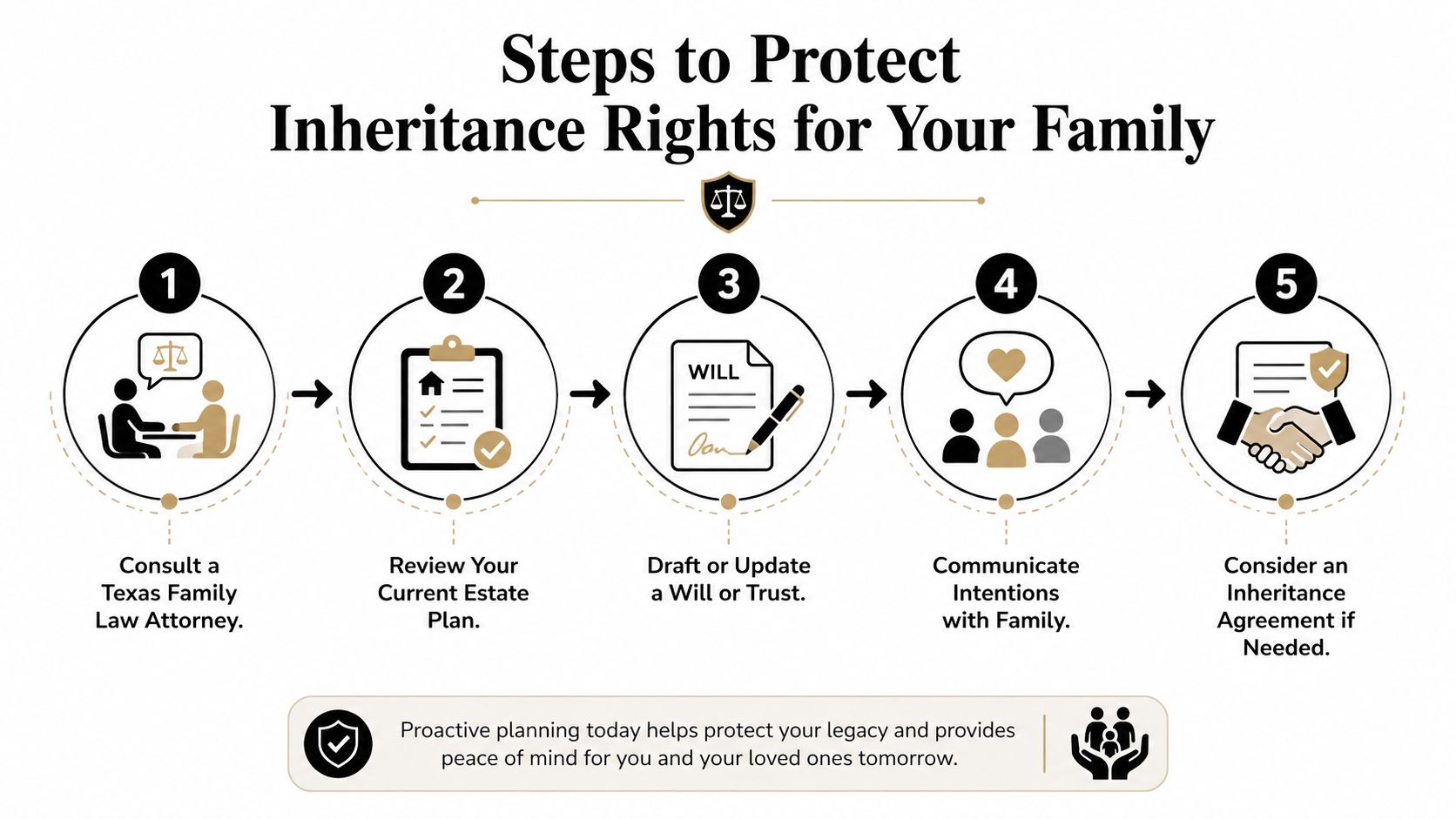
A clear roadmap
- Consult a Texas family law attorney. Adoption and inheritance overlap, and one missed detail can change the outcome. The lawyer should understand both the adoption decree and the estate plan.
- Review the current estate plan. Wills, trusts, and beneficiary forms should match the family relationship as it exists today, not as it existed years ago.
- Draft or update a will or trust. If a parent wants an adopted adult child to inherit from the biological side, the document needs to say that in plain language.
- Talk with family members. Clear communication can prevent misunderstandings, especially in blended or kinship families.
- Keep records organized. Adoption decrees, estate documents, and beneficiary forms should be easy to find when needed.
A family can also benefit from court-ordered legal guidance when adoption and custody issues overlap, especially in CPS or guardianship cases. The state's adoption framework in Chapters 162–166 gives the structure for finalization and parental rights, but the estate plan still has to do its own job.
If you're gathering documents, keep copies of the adoption order, any wills, trust paperwork, and account beneficiary designations in one place. That simple habit can save loved ones months of confusion later. The law is much easier to follow when the paper trail is clean.
The best time to fix inheritance gaps is before anyone is in the middle of grief.
Families who want legal help often benefit from talking with a Texas firm that handles both adoption and family planning. The Law Office of Bryan Fagan, PLLC can help families review how adoption status and estate documents fit together, especially when adult adoption, stepparent adoption, or kinship care is part of the story.
Taking the Next Step Toward Peace of Mind
Texas gives adult adoptees a clear inheritance path through the adoptive family, but the 2005 amendment also made the biological-side rule unmistakable. That bright-line split can protect one family and unintentionally unsettle another if no one updates the estate plan. A will, trust, or beneficiary designation can still preserve the inheritance you want.
The most important thing to remember is that adoption and inheritance are related, but they're not identical. Adoption changes the legal family relationship under Chapters 162–166. Estate planning decides where property goes. When those two pieces match, families are far less likely to face painful surprises later.
If you're wondering whether an adopted adult should inherit from the biological family, the adoptive family, or both through written planning, that's a conversation worth having now, not after a crisis. The answer depends on the exact documents in place and the family relationships involved. A little planning now can spare a lot of conflict later.
If you're sorting through adult adoption, stepparent adoption, or a family inheritance issue in Texas, the Law Office of Bryan Fagan, PLLC can help you review the documents that control who inherits and why. Visit Law Office of Bryan Fagan, PLLC to schedule a free consultation and get guidance that fits your family's situation.
