Renting does not disqualify you from adopting in Texas. Texas law requires a home study before approval, and the evaluator must confirm that the residence is clean, safe, free of obvious hazards, equipped with smoke detectors, and large enough for the child, while the applicant must be at least 21 and healthy enough to parent.
Maya, a Houston renter, has been hoping to adopt a five-year-old from foster care. Her biggest fear isn't parenting, finances, or the home study. It's the lease. She worries that a landlord's signature, an apartment's layout, or the possibility of moving before finalization will end her chances before she starts.
That worry is common, but it focuses on the wrong question. Texas adoption professionals and courts generally need to know whether the child will have a safe, stable, appropriate home. They don't require the applicant to hold the deed. DFPS guidance recognizes renters, and Texas law places the emphasis on the residence, the household, and the adults' ability to care for the child, not on homeownership. Texas home study requirements for prospective adoptive parents explain these core evaluation duties.
The details still matter. A lease may limit occupants, a roommate may need screening, and a small bedroom may work for one placement but not another. The pathway also changes the practical review. Foster-to-adopt, private domestic adoption, stepparent adoption, and kinship adoption all involve different family circumstances.
Renting Does Not Disqualify You From Adopting in Texas
Maya's rental is not an automatic barrier. Texas adoption rules don't make homeownership a condition of approval for foster-to-adopt, private domestic, stepparent, or kinship adoption. The central question is whether the home can safely meet the child's needs and whether the adults can provide dependable parenting.
The home study normally includes the applicant, family members, and everyone living in the home. The evaluator must visit the residence at least once and assess conditions such as cleanliness, obvious hazards, smoke detectors, and available space. The applicant must also be 21 or older and healthy enough to assume parenting responsibilities under the Texas requirements described in the Texas home study guidance.
What agencies care about
A social worker or agency may ask about:
- The home environment: Is the residence safe for the child's age and needs?
- The household: Who lives there, and how will each person respond to the placement?
- Parenting readiness: Does the applicant understand the child's history, needs, and potential trauma?
- Stability: Can the family maintain a reliable routine and meet the child's needs?
- Background information: Have the required references, training, and background checks been completed?
A landlord may have legitimate lease requirements, but a landlord's ownership of the property doesn't replace the agency's evaluation. If a child will join the household, you may need written permission, an updated occupancy record, or a lease addendum. Those are practical housing steps, not proof that renters cannot adopt.
The child needs a safe home, not a mortgage statement.
Texas Family Code Chapter 162 governs adoption cases, while Chapters 163 through 166 address related family-law procedures, including termination and parent-child legal issues. The court's guiding concern remains the best interests of the child. That means a prepared renter may present a stronger application than an unprepared homeowner.
What the Texas Home Study Evaluates
A family renting a home can still present a strong adoption application. The home study examines the people, residence, and circumstances surrounding a possible placement. Texas guidance points evaluators toward safety, usable space, household interviews, and the applicant's readiness to parent.
The physical home
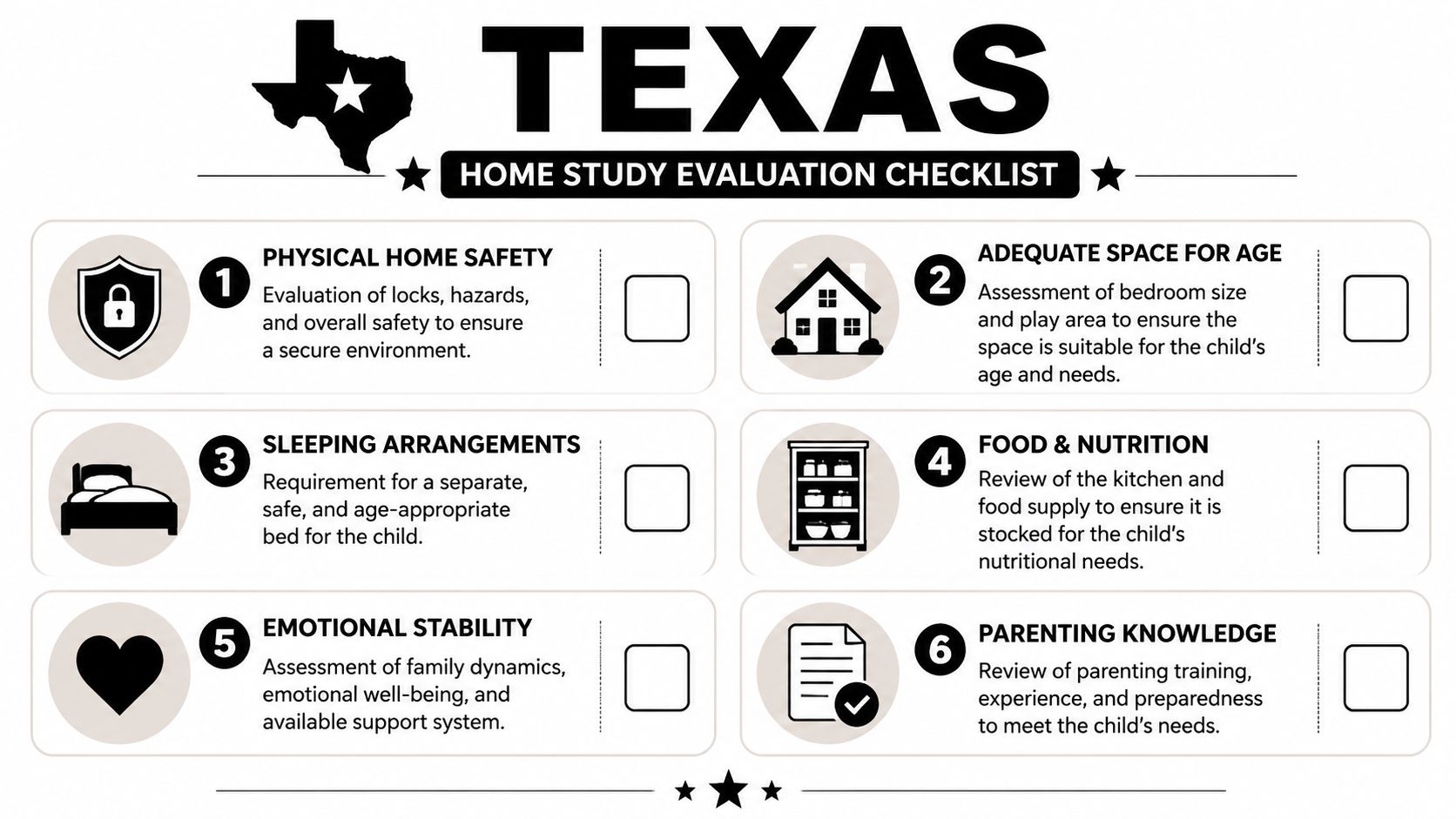
The evaluator may check working smoke detectors, secure doors and windows, safe storage for medications and cleaning products, and the absence of obvious hazards. Pools, firearms, stairs, and similar risks call for a clear safety plan that the family can explain and demonstrate.
Sleeping arrangements receive close attention. The evaluator considers the child's age, placement type, bed, personal space, privacy, and the way the rooms function together. Foster-care standards may set specific expectations for room size and bedroom occupancy, including 40 square feet per occupant, along with limits on bedroom sharing under applicable Texas guidance. The Texas minimum standards for child-placing agencies provide the relevant framework.
A small rental can work for one placement and require changes for another. The floor plan, sleeping arrangement, and pathway determine the answer more than ownership status.
The people in the home
Everyone living in the residence matters. The evaluator may interview household members and consider relationships, support systems, emotional readiness, and parenting knowledge. A roommate, adult child, partner, or relative remains part of the household assessment, even when that person is not adopting.
A one-bedroom rental may be unsuitable for some placements yet workable for another, depending on the child's age and required sleeping arrangement. The Texas Adoption Home Study Explained offers further context about the evaluation and possible waivers. Families can also review these Texas adoption home study requirements while preparing for the visit.
Lease Rules and Documentation Renters Should Prepare
If you rent your Texas home, begin the home-study file with documents showing that your housing is lawful, stable, and suitable for a child. The evaluator will want to understand your right to live there and whether the proposed household can occupy the residence under the lease and applicable rules. A landlord's ownership of the property is separate from the agency's evaluation, which focuses on occupancy, safety, and suitability.
Gather these records:
- Current lease: Keep every page, renewal, addendum, and occupancy provision together.
- Landlord confirmation: Request a letter acknowledging the home study and stating whether a child may reside in the home.
- Proof of residence: Utility records, official mail, or similar documents can verify the address.
- Income and rent records: Organize evidence that rent and household expenses are handled consistently.
- Renters insurance: Keep policy information available if you carry coverage.
A landlord may have questions about the request. Explain that the letter concerns household occupancy and housing stability. If the owner is hesitant, ask whether a written lease addendum, updated occupant form, or renewal discussion would resolve the issue. Keep any agreement accurate, and avoid promising a placement date that conflicts with the lease or local rules.
Check occupancy before the visit
Review the proposed household size with the property manager or local housing office if the lease or unit rules are unclear. Occupancy standards can depend on room count, local requirements, and the property's policy. The social worker may also ask whether every adult living in the home has permission to reside there.
Save the records in both a digital folder and a paper folder. This guide to required documents for a Texas adoption home study can help organize the broader file. Consent is separate from housing documentation. Who Must Consent to a Texas Adoption? explains Texas consent rules, including the child's voice at age 12.
How Rental Rules Differ by Adoption Pathway
A rental home is reviewed according to the adoption pathway and the child's needs. Foster placements often involve closer review of bedrooms, household members, and agency standards because the child may be entering an unfamiliar home. Stepparent and relative adoptions may focus more on an existing relationship, caregiving history, and family stability.
| Adoption Pathway | Lease/Landlord Check | Bedroom Requirements | Home Study Depth |
|---|---|---|---|
| Foster-to-adopt | The agency may verify lawful occupancy and permission for placement. | Space, room sharing, and sleeping arrangements can receive close review. | Safety, household, training, and background review. |
| Private domestic adoption | The agency may confirm that the child can legally and safely live in the rental. | The arrangement should fit the infant's or child's needs. | Review of the home, readiness, household, and supporting documents. |
| Stepparent adoption | Permission may matter if the child is being added to the lease. | Existing family arrangements are examined for safety and suitability. | Relationship, stability, consent, and required legal reports remain important. |
| Kinship or relative adoption | The agency or court may examine the residence and all adults present. | The layout must support the specific child's needs. | Family relationships, caregiving history, safety, and legal status receive attention. |
The lease is part of the picture, not the entire decision. Foster and adoptive home studies assess safety and available space rather than home ownership, and renters may apply. Families considering foster care can review foster-to-adopt in Texas and ask their agency which bedroom, occupancy, and placement standards apply to the child they hope to welcome.
A property manager may also have rules about adding an occupant, especially in a condominium or shared community. The Towne and Country Property Management resource helps explain why owners and managers may ask about occupants, permissions, and community restrictions. It is general property-management information, not Texas adoption advice. Contacting the landlord early can reveal whether written approval or a lease update is needed.
The pathway can also affect the timing and legal review. In a stepparent case, Texas law generally requires the child to have lived with the petitioner for six months before the court grants the adoption, although a judge may waive that period when doing so serves the child's best interest. Children 12 or older generally must consent in writing or in court. Texas stepparent adoption information explains these requirements.
Treat each pathway like a different checklist. Your lease establishes permission to occupy the home, while the home study evaluates whether the actual living arrangement is safe, suitable, and workable for this child.
Real Scenarios Renters Face and How to Solve Them
A Houston renter in a one-bedroom apartment wants to adopt an older child. Her agency asks where the child will sleep and how much privacy the space provides. Buying a house is not the answer the agency needs. The applicant needs a workable plan, such as reconfiguring a dining alcove, adding a proper closet, or using a room divider, with written confirmation that the arrangement follows the lease and applicable standards.
The agency must approve the proposed layout. A decorative divider cannot make an unsafe or legally unsuitable area into a bedroom. Before relying on the arrangement, the applicant should show the social worker the actual setup, measurements, storage, and exit path. Seeing the space early lets the evaluator identify changes before the home study is delayed.
Roommates require openness
A Dallas renter shares a leased home with a roommate. Because the home study examines every adult in the household, the agency will ask about that roommate. The roommate may need to consent to a background check, complete fingerprinting, attend an interview, and explain how they will protect the child's privacy.
The roommate may move out if cooperation is not possible. That is one solution, not the only one. A written release, completed screening, and clear household boundaries may address the concern if the agency determines that the arrangement is safe.
Safety fixes can be practical
A San Antonio family rents a duplex with a fenced backyard but lacks a carbon monoxide detector. They install one, lock cleaning chemicals away, and document the yard and any pool-related safety measures. The family then asks the evaluator to confirm that these changes resolve the concern.
The same pattern appears across rental applications: a missing document, an unclear sleeping plan, or a correctable safety issue. Each problem gives the family a specific task to address. Prompt action gives the agency something concrete to evaluate, helping the home study focus on whether the rental can support this child safely.
Why Housing Layout, Not Ownership, Is the Key Consideration
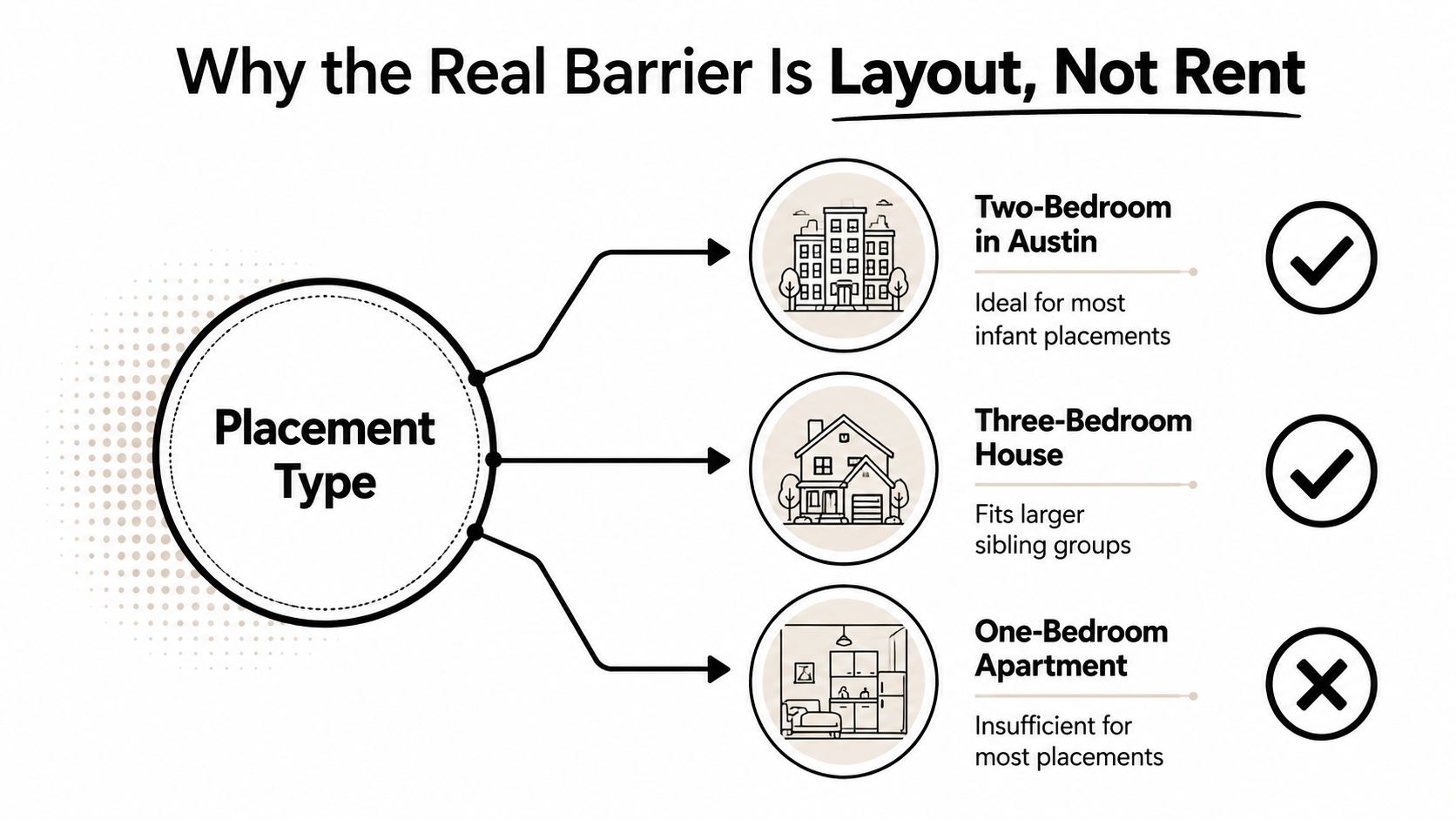
A renter in Texas may have a home that fits one placement and needs changes for another. The useful question is whether the rental's layout matches the child profile and adoption pathway you are pursuing.
A two-bedroom apartment in Austin may suit one child under a particular foster placement plan, yet lack the sleeping arrangements needed by a sibling group. A rented three-bedroom house may offer more flexibility for siblings, while a studio may not provide the privacy or sleeping space required for many placements. The child's needs and the home's setup guide the evaluation.
Match the home to the placement
Ask yourself:
- Age range: Does the sleeping arrangement fit the child's developmental needs?
- Sibling placement: Could the home safely accommodate siblings together or separately?
- Privacy: Does each child have a suitable personal area?
- Household composition: Can every adult support the placement and complete required screening?
- Lease timing: Can the rental remain available through visits, placement, and court proceedings?
Texas foster standards make room size and bedroom-sharing rules important. The applicable standards include 40 square feet per occupant and restrictions on bedroom sharing. Ask the agency how those requirements apply to the specific placement, because a suitable arrangement for one child may not suit another.
A spacious homeowner can still fail a safety review, just as a renter with a thoughtfully prepared home can satisfy the relevant requirements. Treat the home study like a practical fit check: describe the space accurately, show how it meets the child's needs, and identify any limitation early.
This approach replaces embarrassment with preparation. Renting is one part of the housing picture, while layout, safety, privacy, and continued availability help the social worker assess whether the home can support the placement.
Timeline From Home Study to Finalization for Renters
A lease can expire while an adoption is still underway. From the home study through the court hearing, renters should ask whether the home will remain safe, lawful, and available if the housing arrangement changes.
Start with the home study
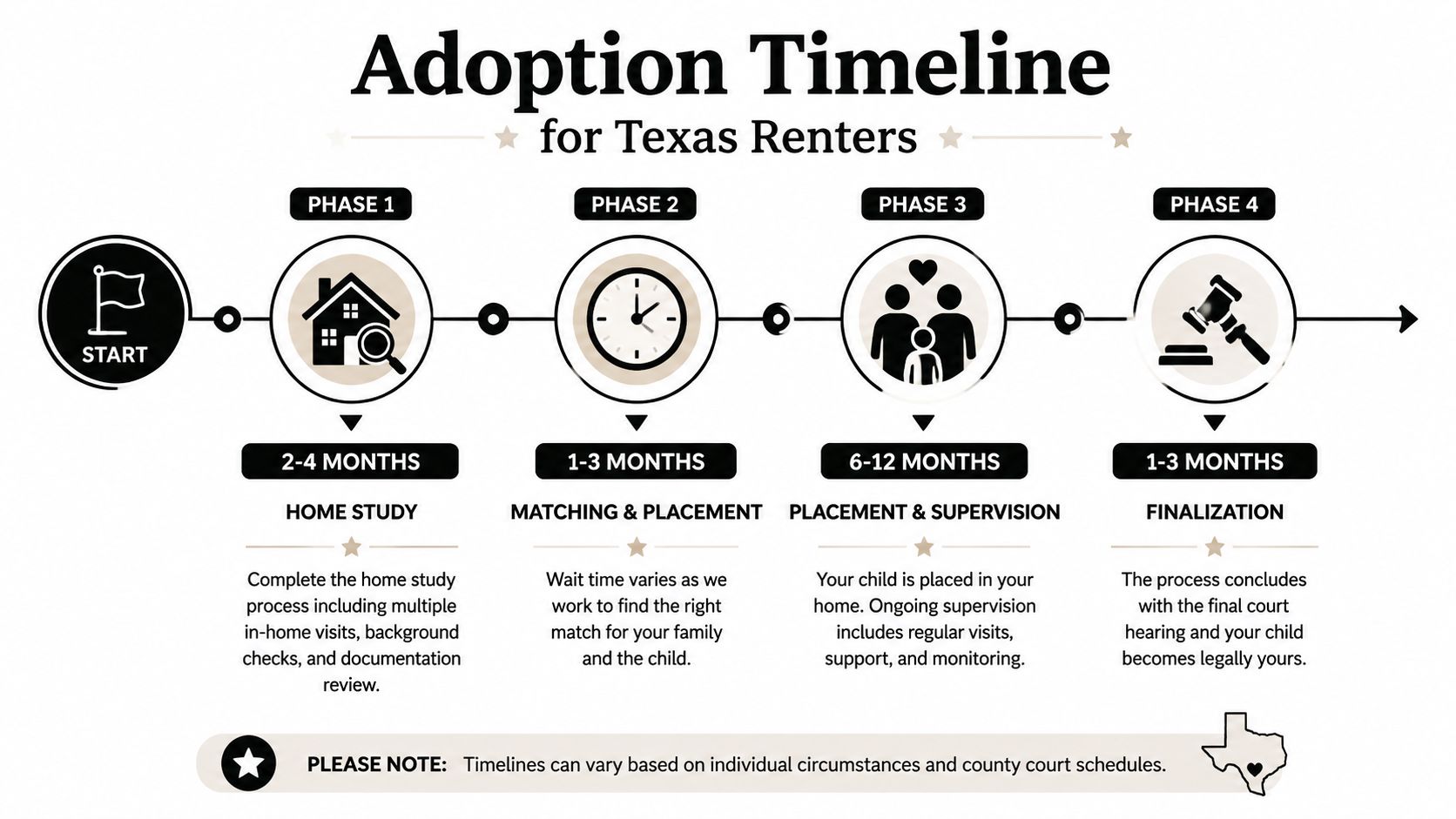
The home study uses interviews, documents, background information, and an in-home visit to assess readiness. Texas DFPS explains that the broader process may include training, references, and a criminal background check. For an out-of-state family, the study may also need to be current before a Texas placement occurs, according to DFPS adoption guidance.
Report a lease expiration, planned move, roommate change, or pending renewal as soon as you know about it. Early notice gives the agency time to review the change and decide whether an updated visit or document is needed. Hiding a housing change can create more trouble than addressing it openly.
Placement and finalization
After matching and placement, supervision visits, agency reviews, and court reports may continue. A stepparent adoption generally requires the child to live with the petitioner for six months, although a judge may waive that period when doing so serves the child's best interest. The agency or attorney can explain the schedule for the pathway involved, rather than relying on another family's experience.
Texas guidance also addresses a gap between evaluation and placement. If the child does not begin living with the adoptive parents within six months after the preplacement evaluation is completed, the evaluation must be updated within 30 days before placement. National child welfare guidance for Texas describes this update requirement.
Finalization takes place in court under Texas Family Code Chapter 162. The judge reviews required reports, interviews, home evaluations, and background information while considering the child's best interests. Keep lease renewals, landlord letters, address records, and safety documents current until the adoption order is signed.
Your Next Steps and How We Can Help
You don't need to solve every legal and housing question before making the first call. Start with a short, organized review of your situation.
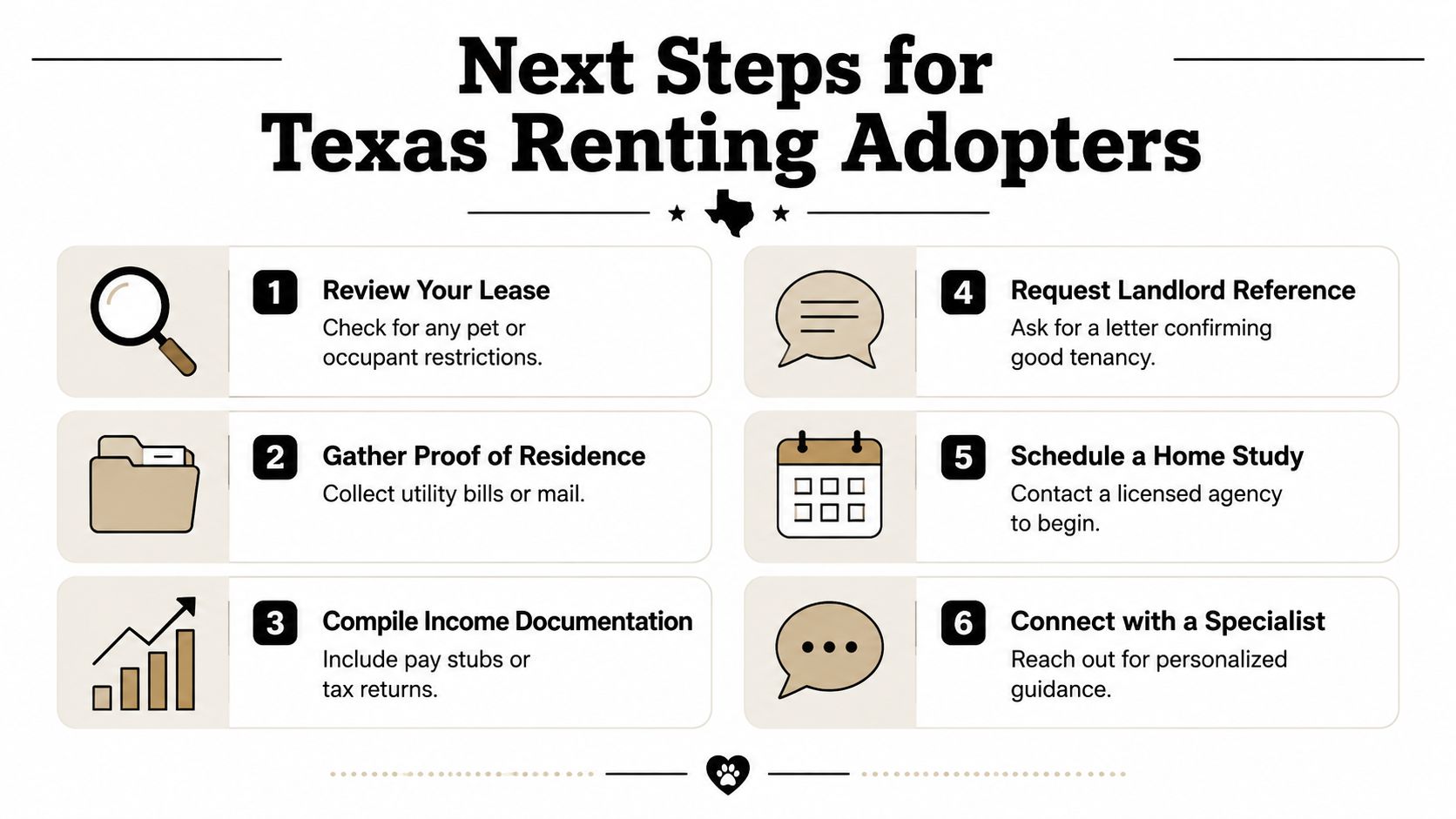
- Review your lease: Look for occupant limits, approval requirements, renewal terms, and clauses affecting children in the home.
- Gather residence records: Collect your lease, renewal documents, utility records, and other proof of lawful occupancy.
- Organize financial information: Prepare the income and expense records your agency or attorney requests.
- Ask for a landlord reference: Request a letter confirming your tenancy and addressing whether a child may reside in the property.
- Contact a licensed agency: Ask what pathway and child profile fit your home's layout.
- Get legal guidance: Discuss lease language, consent, home-study concerns, parental-rights issues, and court finalization with an adoption attorney.
A brief legal consultation can clarify whether foster, private, kinship, or stepparent adoption best fits your family. It can also help you address a reluctant landlord, explain a roommate's role, or prepare the paperwork required under Texas Family Code Chapters 162 through 166.
The Law Office of Bryan Fagan, PLLC helps Texas families with home-study preparation, adoption applications, parental-rights issues, and court finalization, including foster, stepparent, relative, domestic, LGBTQIA+, and CPS-related matters. If you rent, bring your lease and a description of your household to a consultation so an attorney can help you identify the practical steps toward a safe, stable placement.