
At a kitchen table in Houston, a foster mom might be doing the math with her husband while three siblings eat cereal in the next room. The oldest already knows where the toothbrushes go, the middle child still wakes up crying, and the baby only settles when the older sister hums. The question isn't whether the children belong together, it's whether the home, the paperwork, and the court process can hold all of them at once.
That's the heart of adopting a sibling group in Texas. Texas child welfare policy prefers keeping brothers and sisters together whenever possible, but the state's own data shows how often that gets complicated. TexProtects reports that nearly two-thirds of siblings were placed together in 2021, while Texas CASA says roughly 35 to 40% of sibling groups in foster care are still separated, and for groups of 3 or more, fewer than 50% are placed together (TexProtects state report).
That's why this topic isn't just about a happy ending. It's about capacity, timing, trauma, and the legal steps that keep a family from being torn in two directions at once. Texas law treats sibling connections as serious relationships, and DFPS policy expects workers to exhaust placement efforts before separating siblings when they can safely remain together.
Keeping Brothers and Sisters Together in Texas
A couple in Amarillo may start with one foster child and then hear that a younger brother and older sister are still waiting. A family in Houston may already have a child sleeping in the guest room and wonder whether they can open one more room, or two. Those moments feel emotional, but they also become legal and practical questions very fast.
Texas data makes the challenge plain. In FY2020, 6,397 sibling groups were in substitute care, and 66.2% were placed together. That share moved to 64.3% in FY2021 and 62.6% in FY2022, while the number of sibling groups in care still remained high at 6,104 and 4,523 across those later years (Texas CFSR state report). When the group is larger, the math gets harder, because one foster home has to fit more beds, more routines, and sometimes more therapeutic needs at once.
What the law is trying to protect
Texas doesn't treat sibling bonds like a nice extra. It treats them like part of a child's permanency picture. DFPS guidance says siblings should be placed together whenever possible, and when they can't be, the agency has to keep working on contact and document why separation happened. That's why many families find themselves thinking less about “Can we adopt a child?” and more about “Can we keep this child with the siblings who already know their history?”
Practical rule: If a sibling set is being discussed, the family should ask early whether the placement plan can support all of them, not just the child who arrived first.
Texas Family Code also matters because it gives courts and agencies tools to preserve sibling relationships, especially when contact needs to continue after adoption. A sibling placement is never just a bed assignment. It's a decision about whether a child can stay connected to the only people who share their earliest memories.
For families looking for a place to start, the Texas Adoption Resource Exchange can be part of the search, but the deeper work is deciding whether the household can carry a sibling group for the long haul. The next step is figuring out which adoption path fits that answer.
Choosing the Right Texas Adoption Path
A couple sits at the kitchen table with a caseworker's packet spread out between coffee mugs and school papers. One child is already in their home. A sibling is waiting in another placement. The question is not just whether they want to adopt, it is which Texas adoption path can carry the whole sibling picture without breaking the legal chain.
The four main paths families use
Foster-to-adopt is the route many sibling groups take. The children come through DFPS or a contracted child-placing agency, and the case may begin with reunification before the focus shifts to permanency. Kinship or relative adoption is common when grandparents, aunts, uncles, or older siblings step in after a family crisis. Private agency adoption can include sibling placements, though full sibling sets are less common there. Stepparent adoption usually involves one child already living in the home, but it can overlap with sibling issues in blended families.
Texas Family Code Chapter 162 controls adoption, and the subchapters matter because they deal with consent and termination rules that decide whether a child can be adopted and whose rights must be addressed first (Texas Family Code Chapter 162). Subchapters B, C, D, and F are where families often run into the steps that move a child from placement to legal permanency.
| Texas Adoption Pathways for Sibling Groups | Likelihood of Sibling Group | Governing Law | Best For |
|---|---|---|---|
| Foster-to-adopt | High | Texas Family Code Chapter 162, DFPS rules, termination and consent provisions | Children already in care, including sibling sets needing permanency |
| Kinship adoption | High | Texas Family Code Chapter 162, related DFPS placement rules | Relatives caring for nieces, nephews, grandchildren, or siblings |
| Private agency adoption | Lower | Texas Family Code Chapter 162 | Families seeking private placements, sometimes older sibling sets |
| Stepparent adoption | Usually lower | Texas Family Code Chapter 162, consent rules for existing parental rights | A child already living in the home with a legal parent and stepparent |
Families sometimes work more than one path at once. A relative caregiver may be asking whether a foster placement can later become an adoption. Another family may be trying to keep one child placed while still preserving contact with a sibling who lives elsewhere. An attorney who handles Texas adoption work can sort out which route is legally open and which one only looks workable from the outside.
One practical place families often read early is The Texas Adoption Process Step by Step. It lays out the core stages from choosing the type of adoption to the final decree, which helps families see that every path still brings paperwork, evaluations, and a judge's review.
Preparing Your Home Study for More Than One Child
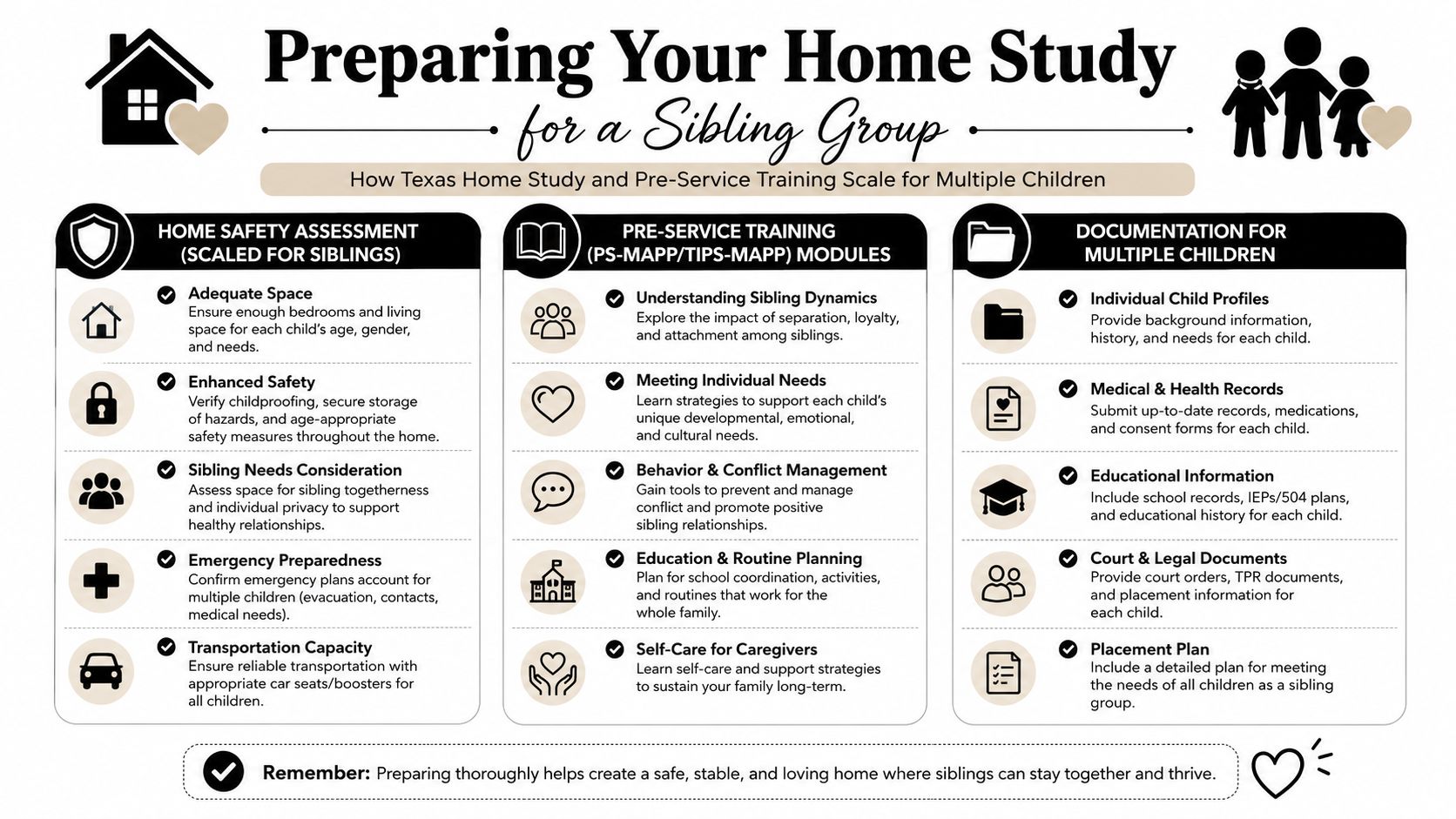
A home study for one child is about fit. A home study for a sibling group is about whether the house can absorb motion, noise, grief, and competing needs without breaking down. The social worker isn't just looking for extra beds. They're looking for whether the adults can keep the children safe, settled, and connected.
What the home study has to show
Texas home studies and pre-service training, including PS-MAPP or TIPS-MAPP, ask for more than a checklist. Families should expect financial statements, medical reports, references, background checks, and a clear written explanation of how the household will handle more than one child at once. Bedroom space matters, and the state's residential rules also address how much room each child needs per child in care settings, including the bedroom-space standards in Tex. Admin. Code §749.2471 (Texas adoption home study overview).
A written capacity statement should address the practical pieces that come up fast in sibling cases:
- Bedroom space: Measure rooms and photograph them so the social worker can see how sleeping arrangements will work.
- Age dynamics: A teenager and preschooler need a different plan than two school-age siblings.
- Supervision: Explain who is home after school, who handles pickups, and how the adults divide attention.
- Transportation: Show how all the children fit in the vehicle and who manages school runs.
- School enrollment: Prepare for how paperwork, uniforms, and first-day transitions will work if multiple children arrive together.
A strong home study tells the court that the adults already thought through the hard parts, not just the sweet ones.
The social worker will still interview every household member and look at whether existing foster children can handle a new sibling without the whole home tipping off balance. If there's prior CPS history, disclose it. If there are behavioral or medical needs, name them plainly. Families who try to minimize stress usually create more of it later.
For readers mapping out how many children the home can realistically support, How Many Kids Can You Adopt in Texas? is a useful reference. The point is simple, though. A careful home study is often the clearest sign that a sibling-group adoption can move forward smoothly.
Texas Court Process and Finalization
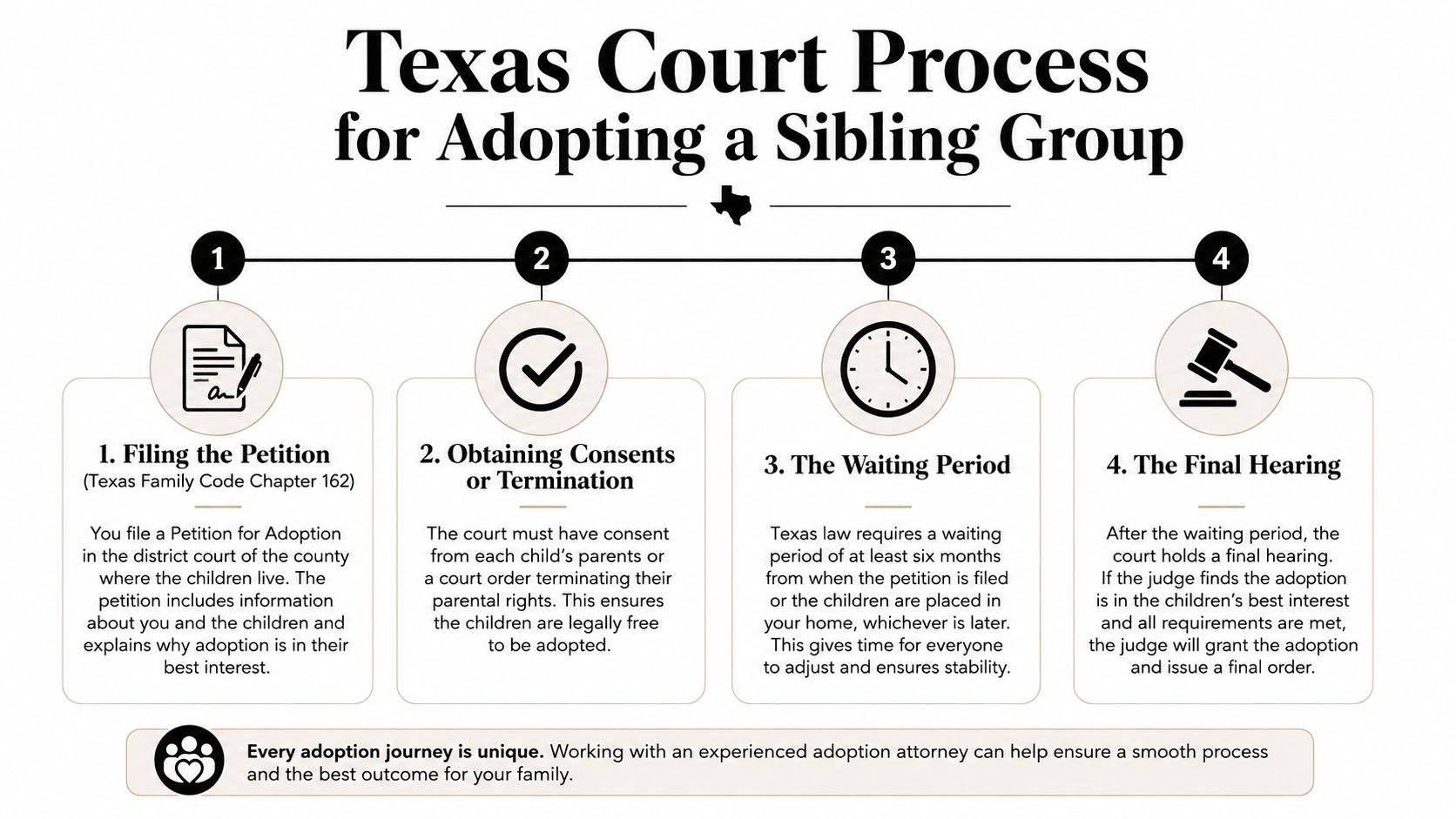
A sibling-group adoption can start at a kitchen table and end in a courtroom, but the court still wants the same thing families do, proof that the children can stay together in a safe, stable home. The judge looks for a legal path that frees the children for adoption, the required reports, and a final order that fits the children's best interests.
The steps that usually show up in court
A petition begins the case under Texas Family Code Chapter 162. From there, the lawyers and caseworkers gather consents or affidavits of relinquishment. If parental rights are still contested, the State must prove the grounds for termination under Section 161.001. TexasLawHelp explains that adoption cases usually include reports and studies showing the adoption is in the child's best interest, with personal interviews, home evaluations, and a look at the child's relationships with the adults involved (TexasLawHelp adoption overview).
Sibling cases usually carry more moving parts. If a child is 12 or older, that child's consent may be required in some adoption settings, including stepparent adoptions. Texas law also tells adoptive parents to pay attention to sibling rights and access issues. Chapter 162 says the Department must tell adoptive parents that a child's sibling may have legal rights to seek access under Sections 102.0045 and 153.551. That is one reason contact can stay part of the legal picture even after the adoption is final.
TexasLawHelp also notes that the court process often includes health, social, educational, and genetic reports, so the final hearing is usually the last stop on a long paper trail. Sometimes the court orders a social study under Section 107.051, and the placement report helps show how the child is living in the home before finalization. Delays happen when a consent is missing, a report comes in late, or the court needs more time on a sibling-contact issue.
A sibling-group case often moves more slowly because there are more children, more history, and more details to sort out. Foster-to-adopt cases also usually involve post-placement supervision, which is different from private placements.
The hearing itself can be quiet. A judge may ask a few questions, review the papers, and sign the decree. For families who have spent months building bedrooms, calendars, and trust, that short hearing can feel almost too small for the work behind it.
Costs, Subsidies, and Financial Planning
The biggest myth around sibling-group adoption is that the costs are all the same. They aren't. A foster-to-adopt case with state support looks very different from a private placement, and kinship families often face different practical costs than stepparents or private applicants.
What families still have to budget for
Texas DFPS adoption data show that permanency paths already include a mix of relatives and non-relatives. In 2021, there were 2,085 adoptions by stepparents, 983 by other relatives, and 1,575 by non-relatives, which is a reminder that the system already depends on different family structures to carry children home (Texas CFSR final report). For sibling-group cases, the financial question usually starts with who is paying for the legal steps and who is paying for the day-to-day reality of more children under one roof.
One-time costs can include court filing fees, attorney fees if termination is contested, home study fees through a licensed child-placing agency, and travel if an ICPC placement brings siblings from another state. Ongoing costs are different. Think daycare, clothing in multiple sizes, school fees, bigger grocery bills, and a vehicle that fits everyone safely.
Texas also has Adoption Assistance, which is the subsidy program many foster-adopt families rely on when a child qualifies. The negotiated rate is set per child, and the Adoption Assistance Eligibility Determination helps decide whether the child qualifies and what support may continue after finalization. Texas Medicaid coverage through STAR Health with Superior HealthPlan can continue after the adoption is final when the child remains eligible, which takes some pressure off medical bills.
For families budgeting around a child with ongoing needs, it can help to think beyond the adoption itself. A practical planning resource like using ABLE accounts for autism can be useful when a sibling has special needs and long-term financial support matters.
| Texas Sibling-Group Adoption Cost Comparison by Pathway | Expense | Foster-to-Adopt (DFPS) | Kinship Care | Private Agency | Stepparent (with siblings) |
|---|---|---|---|---|---|
| Court and filing costs | Varies by case | Often lower with agency support | Can be lower or waived in some situations | Usually family-paid | Usually family-paid |
| Home study and training | Required | Often required | Often required | Required | Sometimes required |
| Ongoing child support costs | Yes | Yes | Yes | Yes | Yes |
| Subsidy or assistance | Possible | Commonly available when eligible | Case-specific | Usually limited | Usually limited |
Families who want the legal and financial pieces lined up can also review Adoption Subsidy Texas. The healthiest budget is the one built before the judge signs the decree, not after.
Preserving Sibling Bonds After Placement
A sibling group can arrive with shared language no adult taught them. They know who gets scared in the dark, who steals the good socks, and who panics when someone leaves the room without saying goodbye. Adoption doesn't erase that bond, but it doesn't protect it by itself either.
What families do when the children land in different places
Some families write a sibling contact plan before finalization. It can be simple, but it has to be real. Who will answer calls, who schedules visits, and what happens when one child is angry and wants to skip the trip all matter more than most adults expect.
Other families build the bond into the house itself. They set up shared bedrooms when it makes sense, or at least pair bedtime routines so the children know they won't be separated at the moment they're most tired. Sunday dinners, school drop-offs, and small rituals can become the thread that keeps siblings from feeling like the court split their lives into before and after.
Texas DFPS caseworkers often support ongoing contact when siblings are placed separately, but family contact only works if the adults keep showing up. When informal arrangements fall apart, a Sibling Access Order under Texas Family Code Section 153.551 can help formalize visits and reduce guesswork. That legal structure matters most when the children's needs change and the old handshake agreement stops being enough.
Healthy sibling contact usually fails from silence, not from lack of love.
There's also the emotional side families don't always expect. A child who was fostered alone for months may resent the sibling who arrives later. A child may grieve the anniversary of removal even after adoption is final. One sibling may stay in contact with a birth parent while another wants distance, and that difference can strain the home if nobody talks about it. A plain, age-appropriate approach to history helps more than a polished speech ever will.
Families who want practical tools for talking through those tensions may find value in healthy communication in families. Sibling relationships change in the teen years, too, so the job isn't finished at finalization. Adoption is the beginning of keeping that bond healthy in a new home.
Your Next Steps and FAQs
The strongest pre-application files usually look boring in the best way. They're complete. They're honest. They show the adults already handled the details that trip up rushed cases.
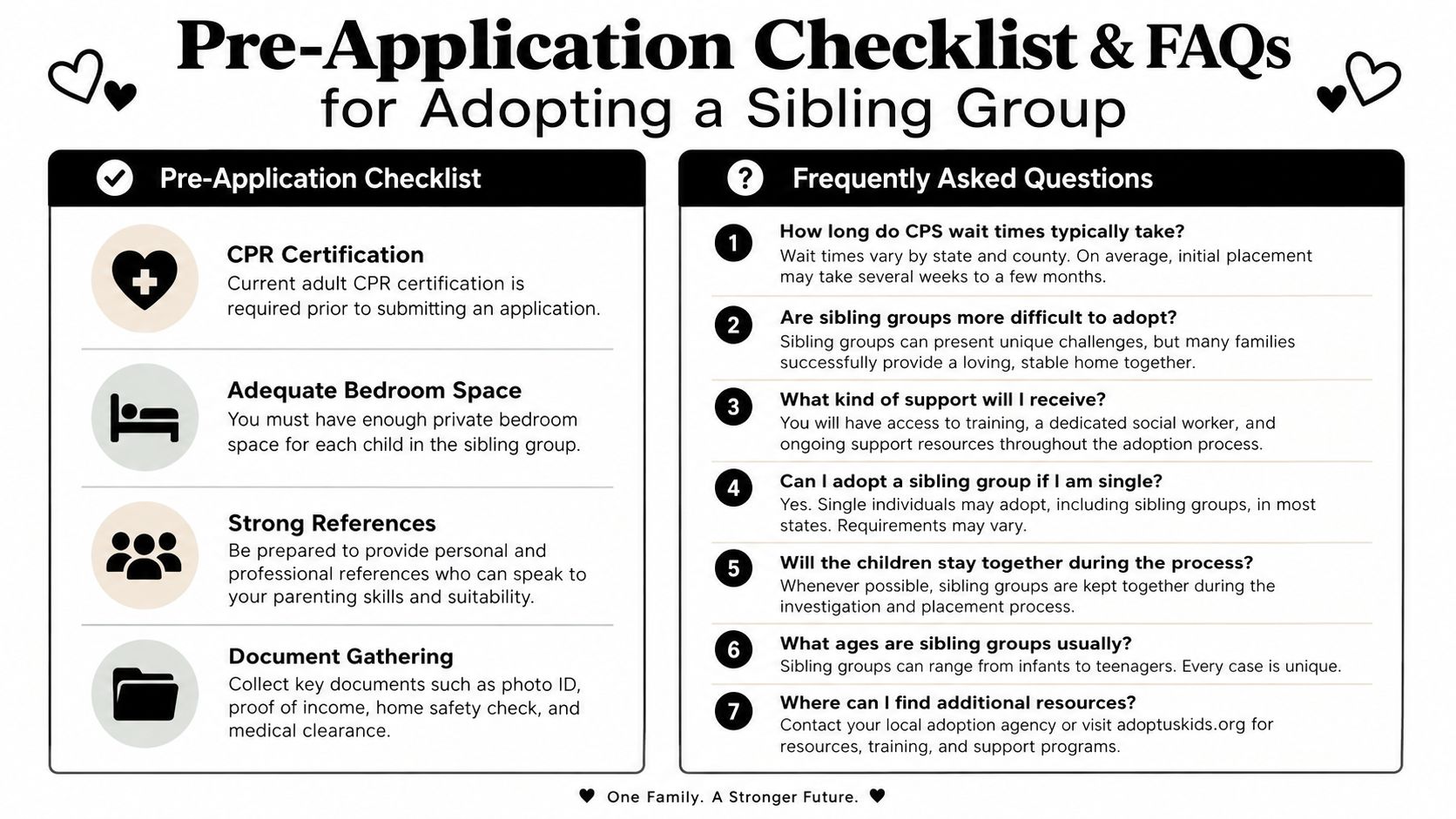
Pre-application checklist
- CPR certification: Make sure the adults in the home can show current training if the agency asks.
- Bedroom space: Measure the rooms and plan the sleeping arrangement for each child.
- Strong references: Choose people who know your parenting style, not just your holiday habits.
- Document gathering: Collect financial records, medical information, background checks, and anything the home study worker requests.
FAQs
How long does CPS placement take for sibling groups?
It depends on whether the children are free for adoption, whether parental rights have been terminated, and whether the home study is already complete. Sibling-group cases often move slower because there are more children and more placement variables.
Can adoption assistance be renewed after finalization?
Yes, if the child remains eligible and the paperwork stays current. The subsidy process is tied to the child's needs and the approved adoption assistance arrangement.
Can we make a post-adoption sibling contact agreement?
Yes. Families often set contact terms before finalization, and Texas law also gives sibling access issues real weight through the framework discussed earlier.
Can a biological parent revoke consent?
Sometimes, but only within the limits allowed by Texas law and the exact paperwork signed. That's why the wording of the relinquishment or consent matters so much.
What happens if siblings are separated during placement?
DFPS still has to keep trying for sibling contact and document the reasons separation happened. The goal stays the same, keep the connection alive when safety allows it.
Can siblings have a big age gap and still be adopted together?
Yes. Age gaps don't block adoption by themselves, but they do change the home study discussion, supervision needs, and bedroom planning.
How do I find a Texas-licensed adoption attorney?
Look for a lawyer who handles Chapter 162 adoptions, understands DFPS practice, and can explain termination, consents, and finalization in plain English. That kind of guidance matters when a sibling group is involved.
If you're trying to figure out whether your home can support a sibling group, the next step is a real conversation about your facts, your timeline, and the children you want to keep together. The Law Office of Bryan Fagan, PLLC helps Texas families work through adoption paperwork, home-study issues, and court finalization with a process that stays centered on the children and the family in front of them.
If you're ready to talk through adopting a sibling group in Texas, visit Law Office of Bryan Fagan, PLLC to schedule a free consultation and get guidance for your family's path.
