
You've already been doing the hard part. Maybe you're the grandparent who shows up for school pickup, keeps the doctor's appointments straight, and has a familiar dinner waiting at night, while everyone else in the family is still trying to figure out what comes next. If you're searching how to adopt my grandchild in Texas, you're probably not asking out of curiosity, you're asking because your grandchild is already home with you, and you want that love and responsibility to be permanent.
That feeling is normal. Adoption is the legal step that turns a caregiving relationship into full parentage, so the grandparent becomes the child's legal parent, not just the person who has been stepping in day to day. That matters for school records, medical decisions, inheritance, and the child's sense of belonging.

Sometimes the question is not just legal, it's emotional too. A grandparent may be holding everything together while still feeling torn about the parents, the child's future, and whether the family can heal. In that kind of moment, a supportive resource like Interactive Counselling Penticton support can be a helpful reminder that caregiving stress is real, even when your own focus is on Texas family law.
When Grandparents Become Parents Again
A lot of grandparents do not wake up one day and decide to adopt. They arrive there gradually, after months or years of living in the in-between. Maybe a grandchild started staying over “for a while,” and now you are the one handling homework, meals, bedtime, and every school call that seems to come before lunch.
That is usually the point where the legal question becomes hard to avoid. You may already be doing the parenting, but without adoption, Texas law still treats someone else as the child's parent. If you want full authority and lasting security, adoption is the step that makes that change real.
What adoption changes in plain English
Adoption does more than add your name to the family story. It replaces the child's legal relationship with the biological parent by creating a new one. In Texas, that means the grandparent becomes the child's legal parent for decision-making, records, and long-term stability. It also means the child is no longer in a temporary arrangement that can shift if another adult changes their mind.
That permanence is often what grandparents are really asking for. A child who has already bonded with you deserves more than a temporary fix if your home is where they have found consistency.
Practical rule: If you are already making the day-to-day decisions, adoption is the step that makes those decisions legally yours too.
A real example helps. A grandmother may have been the only steady adult during a period of family chaos, and the child now calls her house home. Adoption does not change the love that already exists, it gives that love legal weight.
If you are comparing next steps, a clear overview of the Texas adoption process is available in the firm's guide to the Texas adoption process, which can help you see where relative adoption fits among other family-building paths.
A grandparent adoption also carries a practical planning question that families sometimes overlook. If you are already caring for the child, you may also be thinking about what happens if age, health, or other family changes make the arrangement harder later on. Adoption gives you a way to turn daily caregiving into legal permanency, while also giving the child a more stable place in the family network if the unexpected happens.
Adoption Versus Guardianship in Texas
Many grandparents first ask whether they need adoption at all. That's a fair question, because guardianship and adoption can both put a child in a safer home, but they do very different legal jobs. One is usually about caring for a child without ending the parents' rights, while the other creates a brand-new legal parent-child relationship.
That distinction matters when you're thinking about school forms, hospital consent, inheritance, and whether the arrangement is meant to be temporary or permanent. If you only need authority to care for a child during a difficult season, guardianship may fit better. If you want lifelong permanency, adoption is the stronger step.
| Factor | Adoption | Guardianship |
|---|---|---|
| Legal relationship | Creates a new parent-child relationship | Gives caregiving authority without becoming the child's parent |
| Biological parents' rights | Ended before finalization | Usually remain in place |
| Permanency | Intended to be permanent | Often more limited and can change |
| School and medical authority | Full parental authority | Authority depends on the court order |
| If a parent later objects | The adoption, once final, is meant to stand | The arrangement may be revisited by the court |
For many families, the emotional difference is just as important as the legal one. Adoption says, “This child is mine forever.” Guardianship says, “I'm protecting this child now.” Both can be loving choices, but they answer different needs.
If you're still deciding, a plain-language comparison like Legal Guardianship vs Adoption in Texas can help you think through the tradeoffs without forcing a rushed decision. And if the issue is ending the parents' rights first, Termination of Parental Rights Before Adoption shows why TPR is the necessary first step in most adoptions.
Establishing Standing and Resolving Parental Rights
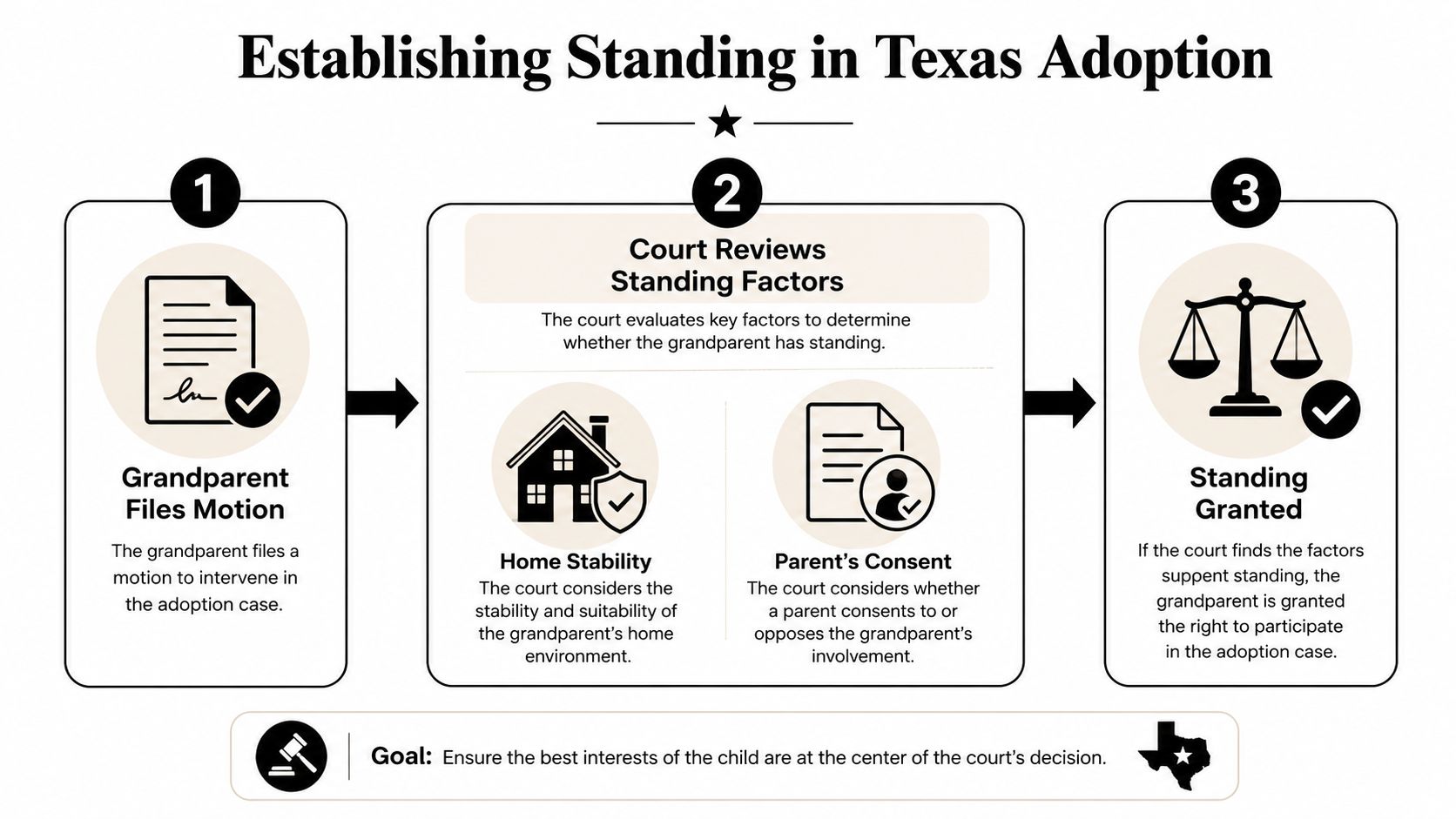
Texas courts don't start with the adoption itself. They start by asking whether you have the legal right to ask for it. Under Texas Family Code practice, if the child has lived with the grandparent for at least six months, standing is generally established, and the case can move forward. That matters because the court needs to know you're not a stranger asking for a child, you're the person already caring for them.
Once standing is in place, the harder issue comes into focus, ending the biological parents' rights. Texas grandparent adoption usually cannot move forward until those rights are terminated, either voluntarily or by court order. If the child is 12 or older, the child's consent is generally required unless the court decides adoption is still in the child's best interests, which is why older children's voices can matter a great deal in these cases.
How rights are usually resolved
A parent may sign a voluntary relinquishment, which can make the path smoother. If a parent refuses, termination may still be pursued in court, but the petitioner must show significant harm to the child's physical health or emotional development if the parent-child relationship continues.
That's a serious legal threshold, and it should be treated that way. Texas courts are not looking for perfection, they're looking for legal availability and the child's best interests.
The court wants two things clear before final adoption, the child must be legally available, and the placement must protect the child's future.
If you want a deeper explanation of the legal side, the firm's termination of parental rights in Texas resource is a useful place to understand why this step carries so much weight. For families who need emotional support while handling these decisions, a guide like Guiding Growth alternatives guide can also remind you that family planning often involves both legal and caregiving questions, especially when a child has special needs or long-term support concerns.
A Texas family law attorney will often help you map the calendar this way, first standing, then petition, then termination, then finalization. When the parents agree, things can move more easily. When they don't, the process can take longer because the court has to sort out rights before it can approve the adoption.
Filing the Petition and Preparing the Home Study
Once the legal foundation is ready, the paperwork phase starts. In Texas, grandparents usually file the appropriate adoption petition, often alongside related family-law filings, and the court expects the case to be supported by documents that show the child's living history, the caregiving arrangement, and the family's stability. Think of this stage as turning your real life into a court record.
That means gathering the basics early. Birth certificates, marriage or divorce records if they matter to your situation, school information, proof of the child's residence, and records showing who has been making decisions can all help the court see the full picture. The judge is not trying to punish you with paperwork, but the judge does need proof that the child's life is stable and that the adoption is lawful.
What the home study usually looks at
Texas grandparent adoption commonly includes a home study, and one Texas legal source estimates that the home study alone typically costs between $500 and $1,500 as described here. That review can include the home itself, the caregiver's health and stability, and whether the child's needs are being met.
Even when the child has lived with you for years, the home study still matters. It is the court's way of checking that the arrangement is safe, steady, and likely to last.
If you're over 60, the review may pay closer attention to health, stamina, and long-term planning. That doesn't mean age prevents adoption. It means you should show the court that you've thought ahead, especially by documenting your support network and naming a backup caregiver plan.
Helpful approach: Put together a folder before the study. Include documents, emergency contacts, school records, and a short note about who can help if you get sick or need support.
The process often feels more manageable when you prepare in pieces instead of all at once. If you want a fuller walkthrough of what evaluators usually want to see, the firm's adoption home study requirements page is a practical companion to this stage.
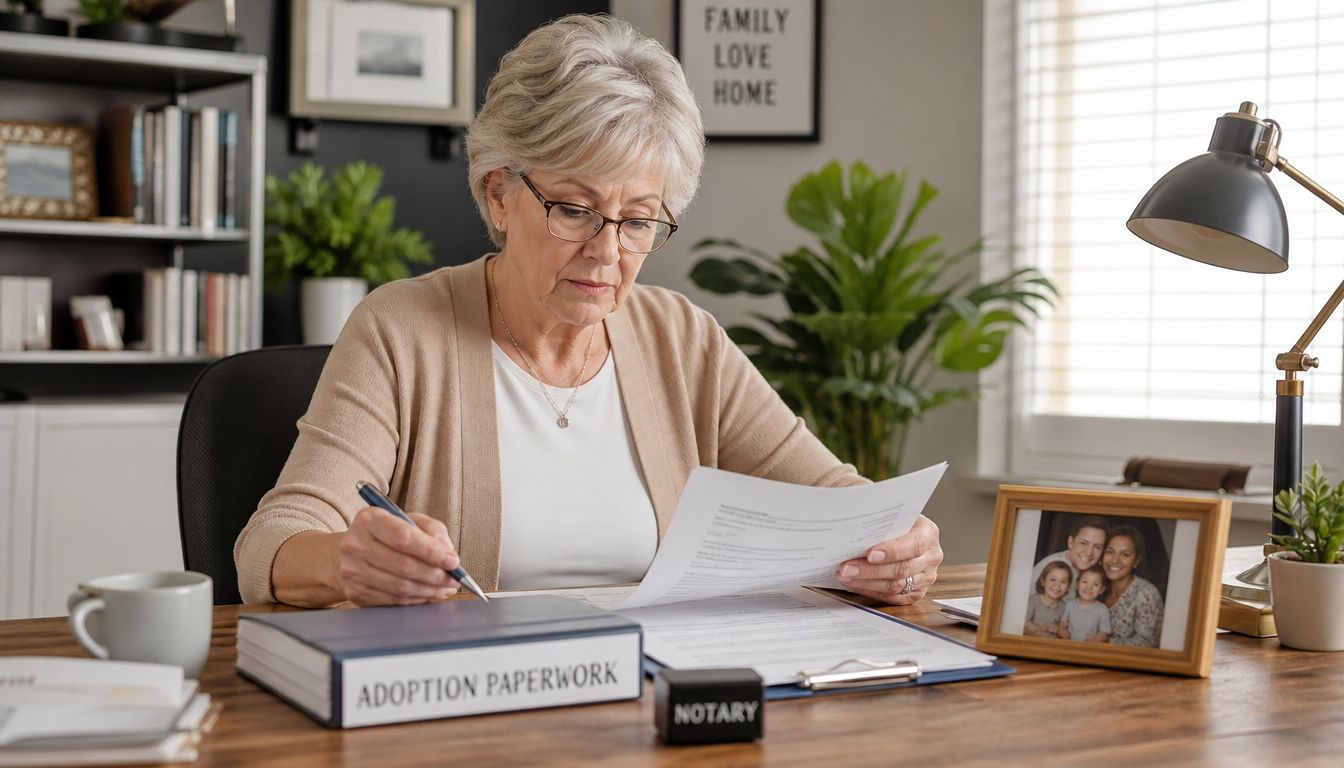
The home study can feel personal, because it is personal. The evaluator is looking at the child's daily life, your caregiving routine, and whether the home feels like a real permanent place for the child, not just a temporary landing spot.
Background Checks, Court Hearings, and Finalization
After the petition and home study, the case moves into the last stretch. A background check and criminal history review usually come next, because the court wants to know the child is being placed in a safe home. Then the hearings begin, and the judge looks at the paperwork, the home study, any consent problems, and whether the adoption fits the child's best interests.
For a grandmother in Houston who has already been raising two grandchildren, this stage can feel especially real. She is not introducing herself to the children. She is showing the court why the home they already rely on should become legally permanent. The judge may ask plain questions about the home, the child's routines, school, medical care, and who steps in during an emergency.
What the court day usually feels like
The process can include an initial hearing, a contested termination hearing if parental rights are still being fought over, and then the final adoption hearing. If the case is ready, some Texas families can resolve termination and adoption in the same hearing.
That final hearing is the emotional turning point. It is the moment the court signs the decree and the child becomes your legal child in every way that matters.
Texas families also need to plan for the practical side. Home study fees are one part, filing fees and attorney fees are others, and those costs can vary with how complex the case is. The timeline often stretches across several months from filing to finalization, especially if a parent contests termination or the court needs more information.
Realistic expectation: The quickest cases are the ones where the legal pieces are ready before the first hearing, and the adults are organized when the judge calls the case.
If you want help with the court side, the Law Office of Bryan Fagan, PLLC handles Texas family adoptions and can walk you through preparation, filing, and finalization. Families who want a fuller explanation of how relatives and kinship caregivers are treated in Texas can also look at a guide to relative and kinship adoption in Texas, which fits the same family-centered approach.
Planning for the Long Term After Adoption
Grandparent adoption doesn't really work that way in real life. A child still needs continuity after the court hearing, which means the paperwork after finalization matters too.
School records, insurance, and inheritance documents should all be updated so they match the child's new legal status. If those records stay inconsistent, families can run into confusing delays later when a school, doctor, or benefits office needs proof of who has legal authority.
The part many guides skip
What if the adopting grandparent gets older, becomes ill, or can't parent the same way ten years from now? That's a real question, and it deserves a real answer. A strong plan includes a backup caregiver, updated estate planning, and a clear record of the child's support network.
For grandparents raising children in multigenerational homes, this kind of planning isn't pessimistic. It's protective. It helps the child stay connected to stable adults if life changes again.
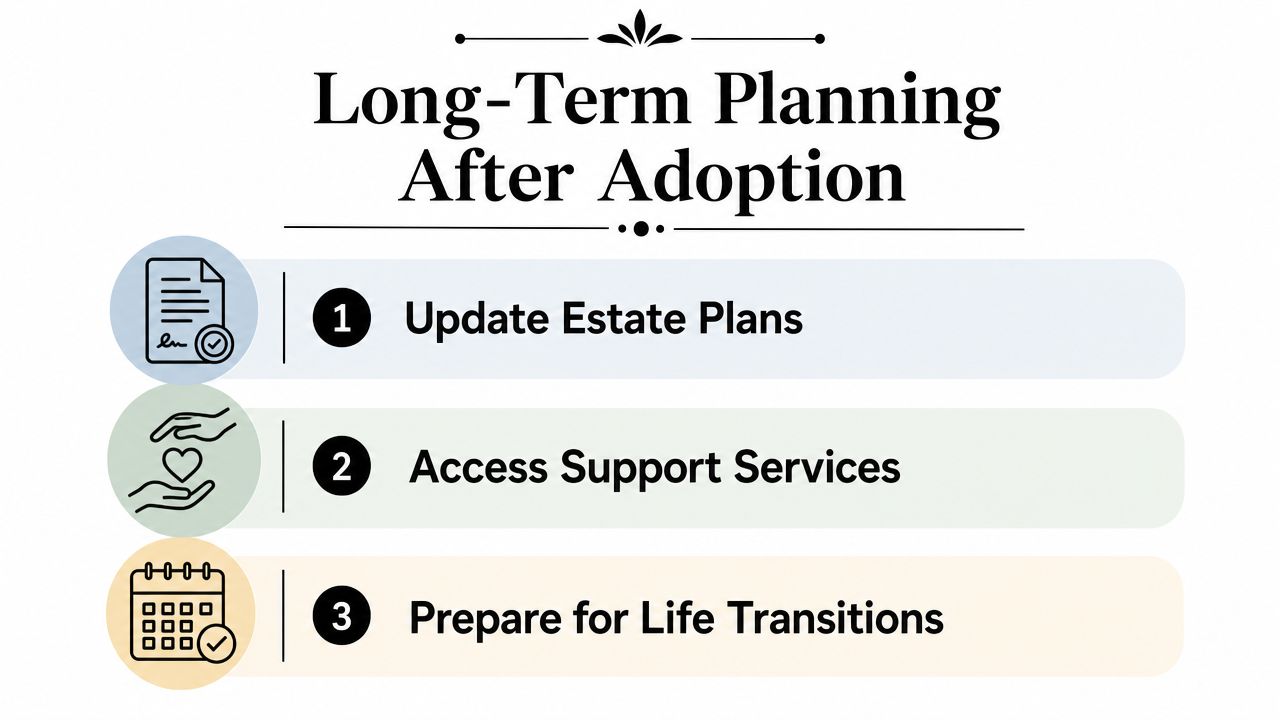
A child who has already lived through uncertainty does better when adults think ahead. That can mean naming backup guardians in your estate plan, keeping key documents together, and telling trusted family members what you want if something unexpected happens.
The child's day-to-day support system matters too. Grandparent adoption works best when the child isn't depending on one person alone, but on a network that can help with rides, childcare, school events, and emotional support. That's especially important when the child is already used to a multigenerational household.
Taking the Next Step With Confidence
A grandparent adoption usually starts with a home that already works. You are feeding the child, getting them to school, comforting them at night, and making the everyday decisions that keep life steady. Adoption then turns that lived reality into legal permanency, so the child's place in your home is clear in every setting, from family life to school forms to medical care.
That is why the next step is not just paperwork. It is a careful look at whether adoption fits your family's needs now and down the road. A Texas family law attorney can help you sort through the pieces, explain what still needs to happen, and match the plan to the child's situation and your timeline.
If a missing parent, relative, or other important family member needs to be found before decisions are made, a resource like track down a friend can help you reconnect the family pieces before you make legal choices. Once the family facts are clearer, you can talk through the Texas adoption process with counsel who understands kinship cases and the practical realities grandparents face.
The Law Office of Bryan Fagan, PLLC helps Texas families in Houston, Dallas, Austin, San Antonio, and surrounding communities, with virtual consultations available statewide. For a grandparent who is already doing the work of parenting, the goal is to make that role permanent in a way that gives the child stability and gives you a clear legal path for the years ahead.
