
Telling your parents you're pregnant can feel like a moment you've rehearsed in your head a dozen times. You might picture a polished surprise, then wonder whether a big reveal would suit your mother but make your father uncomfortable, or whether a quiet conversation would feel more honest for both of them. The best way to tell parents you're pregnant is the one that feels safe, comfortable, and connected to your family. A reveal that photographs well means little if it doesn't fit the people in the room.
These eight ideas are options you can adapt, combine, or skip entirely. Timing, privacy, health needs, and each parent's likely reaction matter more than the decoration or gift. Many people tell one trusted person first and speak with each parent separately before making a wider announcement, so you can stage the conversation at your own pace.
If pregnancy involves adoption, guardianship, CPS, or uncertainty about parental rights, an announcement and a legal decision are different things. Texas Family Code Chapters 162–166 address adoption procedures, which can involve consent, home studies, court proceedings, and finalization. Get qualified legal guidance when you need it, and remember that families can seek support without waiting for a court deadline. Texas adoption and guardianship guidance can help you learn about options.
1. Share a Sonogram Photo
A sonogram gives your parents something real to hold while they take in the news. If they'll value seeing an early image, tuck a clear printout into a card, put it in a simple frame, or hand it to them at a quiet family meal.

A daughter might give her parents a framed scan over Sunday dinner and say, “We wanted you to be among the first to know. We're expecting.” If you're mailing the picture, add a note such as, “Your first grandbaby is on the way!” Either way, let the image support the conversation rather than carry the whole message. Say the news plainly, then give your parents room to react.
Keep the moment private and clear
Ask your healthcare provider for a clear printout or digital copy before planning the reveal. Write the date and a short message on the back, or keep a spare copy if you'd like to protect the original. A laminated copy can help preserve a print that your parents may want to keep.
You don't have to share the image if you aren't comfortable doing so. Some people want to keep medical details private, or don't yet have an image they want to share. You can give them a card instead and say, “We're happy to tell you, but we're keeping the medical details private for now.”
Keep the news yours: Sharing a sonogram doesn't mean you've agreed to share every health update or photo.
If you feel anxious about pregnancy or the conversation ahead, you can read this guide for people worried about pregnancy. For readers considering a keepsake session later, maternity photography in Cobb County offers another way to mark the experience.
2. Give a “Promoted to Grandparents” Gift Box
A small gift box can make the announcement feel warm without turning it into a production. Put a baby bootie, a simple sign, or a onesie inside, then add a card with the name you want each parent to use. One parent's box might say “Promoted to Grandma,” while the other's says “Grandpa.”
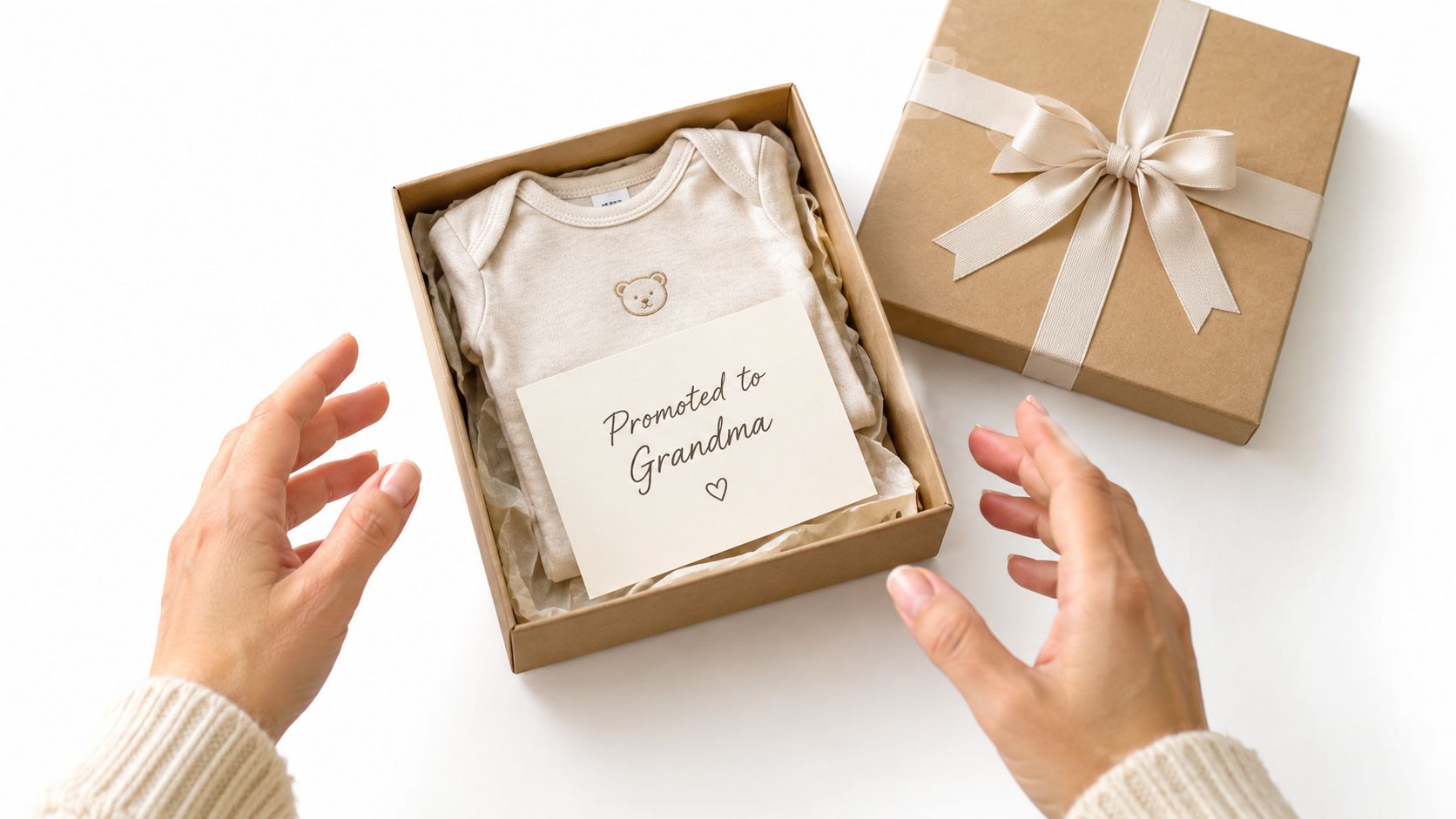
This idea works well when your parents enjoy gifts or like having a small keepsake. You might give each of them a separate box during a visit, or mail one to a parent who lives far away. If you want to tell them together, set the boxes down at the table and say, “We have something small for you.”
Match the gift to what you're ready to share
Choose a gender-neutral item if you don't want to discuss details you don't know or aren't ready to share. Keep the package small and light if you're mailing it, and include a photo of yourself with the gift if you want to make it more personal. A plain card can work just as well as a custom sign.
Think about the relationship, too. A lighthearted title may be welcome in a close, excited family, but it can feel like pressure if your parents are still processing the news or have complicated feelings about becoming grandparents. You can keep the message simple: “I'm pregnant, and I wanted to tell you in a way that felt special.”
A box doesn't need to announce more than the pregnancy. You can leave out the due date, medical information, and plans for the future unless you want to talk about them. For more ideas focused on a new grandparent's role, explore gift ideas for first-time grandparents.
3. Let a Puzzle Reveal the News
A puzzle turns the announcement into something your family can solve together. Choose a picture of the two of you, a sonogram, or a simple message such as “Baby coming soon.” As the image takes shape, your parents can read the news at their own pace.
A couple might bring a custom puzzle to a holiday visit and say, “We brought a game for after dinner.” Another option is to leave a puzzle on the grandparents' coffee table with a note asking them to finish it. When they reach the message, be ready to say what you'd like to share and answer only the questions you're comfortable with.
Keep the activity easy to enjoy
Choose a puzzle that suits the people who'll be putting it together. A small, straightforward design keeps the focus on the reveal, while a complicated puzzle may stretch the moment longer than you want. If you use a separate final piece, attach the message securely or add a note on the box so the piece doesn't get lost.
The puzzle can be a good fit for parents who enjoy games, but it isn't ideal if you need a direct conversation or expect a difficult response. In that case, share the news plainly first and save the puzzle for a later celebration. The announcement should never depend on your parents interpreting a clue correctly.
You can also make the reveal more private by giving the puzzle to one parent at a time. That lets you tailor the conversation to each relationship and gives each person space to respond. If a playful, interactive reveal suits your family, watch a pregnancy puzzle announcement for inspiration.
4. Write a Letter or Send a Video Message
When speaking feels difficult, write the first words down. A handwritten letter lets you share the news in your own voice, explain why you wanted to tell your parents, and say what kind of support would help. You can hand it to them in person or send it ahead of a family visit.
For example, someone who received support during fertility treatment might write, “You stood by us through a hard time. We're grateful to tell you that I'm pregnant.” An expecting father might write to his own dad, “I've been thinking about how much you've taught me. I'm going to be a parent, and I wanted you to hear it from me.”
Say enough, without scripting every reaction
Draft the message, then read it aloud to check that it sounds like you. You don't need to make it poetic. A clear sentence such as “I'm pregnant, and I wanted to tell you privately” is enough to open the conversation.
A short video can help when distance makes an in-person visit difficult. Record it somewhere quiet, keep the message focused, and send it privately rather than posting it publicly. If you'd rather your parents not share the news yet, say that directly in the video or in a note that goes with it.
“I'm telling you because I love you. I'm not ready to talk about every detail yet.”
Give your parents time to take in the letter or video before expecting a reply. They might need a follow-up conversation, especially if the news is unexpected. You can offer a time to talk while making it clear that you don't have to answer every question at once.
5. Share the News at a Seasonal Dinner
A holiday meal or family tradition can give the announcement a natural setting. You might place a card beside the dessert, add a small baby-themed decoration, or set out a stocking with a message for your parents to find. Choose a moment that feels like part of the gathering, not a performance that requires everyone to respond in a particular way.

A couple might serve pie at Thanksgiving with a small note that says, “We're expecting.” Another family might put a stocking labeled “Baby” on the mantel. Before the meal, decide who will share the news first and whether you want to tell your parents privately before other relatives arrive.
Prepare for questions and mixed reactions
A group dinner can bring joy, but it can also make a private announcement feel public. If your parents need time to process, tell them before the gathering or step aside with them during the visit. A seasonal event shouldn't leave them feeling put on the spot, and it shouldn't require you to explain more than you want to.
Think through a simple response in case someone asks about plans you haven't made. “We're still working out what comes next, and we'll share more when we're ready” sets a boundary without ending the conversation. If relatives are likely to spread the news, tell your parents whether the announcement is private for now.
Pregnancy can involve decisions about parenting, adoption, or other support. If you're exploring adoption in Texas, this overview of placing a baby for adoption in Texas can help you understand that support and legal decisions are separate from making an announcement.
6. Involve a Pet or Older Child
A familiar pet or older child can help share the news in a way that feels playful and personal. A dog might wear a bandana that says “Big Sister,” or a child might hold a sign reading “I'm going to be a big brother.” This idea works best when everyone involved is comfortable and the message is simple.
A parent could invite the grandparents over for a casual visit, then let the family dog wander into the room wearing the bandana. If an older child is part of the reveal, explain the pregnancy to them first in language they can understand. That gives them a chance to ask questions and decide whether they want to take part.
Put the child's needs ahead of the photo
Don't ask a child to keep a secret before they understand what the news means. Tell them privately, answer their questions openly, and avoid promising things you can't guarantee, such as exactly when the baby will arrive or how family routines will change. Let them choose whether to hold a sign, join a conversation, or stay out of the announcement.
Pets need the same practical care. Keep a photo session short, use a simple sign, and offer a treat if it helps your pet stay calm. Don't dress an animal in something uncomfortable or rely on it to behave a certain way for the reveal.
If your child or pet becomes unsettled, skip the photo and share the news another way. You can still make the moment warm without asking anyone to perform. For example, say to your parents, “We wanted you to hear from us first. Our family is growing.”
7. Serve a Cake or Baked-Goods Reveal
A cake or plate of cookies can carry the message for you, especially if your parents enjoy sharing food. A bakery cake might read “Baby coming soon,” or cupcakes could have small cards beside them with the news. At brunch, you can let your parents see the message before dessert is served.
One couple might bring a cake to a family visit and say, “We brought something to celebrate.” Another might order cookies with a short message and deliver them to parents who live nearby. If you want to reveal the news through the cake itself, keep the message easy to understand. The moment shouldn't leave anyone wondering whether they've read it correctly.
Keep food and expectations simple
Ask the baker to write the message on a fondant plaque or another clear surface. Check whether your guests have food allergies, and offer an alternative so everyone can join in. If you'd like a photo, ask your parents first or take one only after the announcement, when the moment feels comfortable.
The reveal works well for happy, relaxed family gatherings, but it may not suit a conversation that needs privacy. If you're worried about your parents' response, talk with them first, then share cake later if you want. Dessert can mark the news, but it can't replace the support or boundaries you need.

A simple message is often the most meaningful part. “We're excited to tell you that I'm pregnant” gives your parents the news directly, whether it arrives on a cake, a cookie, or a handwritten card.
8. Make a Pregnancy Countdown Box
A countdown box or jar can give parents a way to feel included over time. Add notes, small treats, or updates for them to open as the pregnancy progresses. A shared digital photo album can serve the same purpose if your family lives far apart or you prefer not to mail a package.
For example, a future grandmother might receive a monthly note with a personal update. A couple might send occasional photos to a private album and invite their parents to follow along. Choose a pace that feels manageable, and tell your parents what you're comfortable sharing.
Make participation optional
Label each note or package clearly, and keep a few extra messages ready in case your plans or timing change. Don't promise a steady stream of updates if you'd rather share news when you have it. You can say, “We'll let you know when there's something new, but we're keeping some details private.”
A countdown isn't the right fit for everyone. You may be uncertain about your plans, prefer privacy, or need space from family involvement. In that case, offer a smaller invitation: “I wanted you to know I'm pregnant. I'll share more when I'm ready.”
If you're considering adoption in Texas, you can read this guide to placing a baby for adoption in Texas. You can tell parents that you're pregnant and still deciding what comes next, without agreeing to share every detail or make an immediate decision.
8 Creative Pregnancy Reveal Ideas Compared
| Announcement Idea | 🔄 Implementation Complexity | ⚡ Resource Requirements | 📊 Expected Outcome | ⭐ Key Advantage | 💡 Ideal Use Case |
|---|---|---|---|---|---|
| Sonogram Photo Reveal | Low | Ultrasound image; optional card or frame | Personal, immediate announcement and keepsake | Authentic and easy to prepare | Close family who would value seeing the ultrasound |
| “Promoted to Grandparents” Gift Box | Low–moderate | Small box, personalized card, optional baby item; mailing may add cost | Fun surprise with a tangible gift | Customizable opening moment | In-person or mailed announcements for grandparents and relatives |
| Puzzle Piece Reveal | Moderate | Custom puzzle or printed image; time to complete | Interactive reveal that can become a keepsake | Encourages shared participation | Small family gatherings or holiday events |
| Handwritten Letter or Video Message | Low–moderate | Paper and postage, or a phone/camera; time to write or record | Personal, reflective message that can be saved | Gives room to express feelings in your own words | Private or long-distance announcements |
| Seasonal Dinner or Holiday Reveal | Moderate | Planned gathering; optional themed food, décor, or gift | Shared, festive announcement for the group | Fits naturally into an existing tradition | Families already gathering for a holiday or seasonal event |
| Pet or Big Sibling Announcement | Low–moderate | Sign, bandana, or collar tag; optional photo setup | Playful reveal that is easy to photograph | Includes a child or pet in the announcement | Families with older children or household pets |
| Cake or Baked Goods Reveal | Low–moderate | Homemade or bakery dessert; advance preparation | Shared reveal during serving or cutting | Flexible for different budgets and gatherings | Brunches, parties, or family meals |
| Nine-Month Countdown Box | High | Box or digital album; recurring notes, treats, or updates | Ongoing involvement throughout the pregnancy | Extends the announcement into a continuing connection | Relatives who want regular updates and are comfortable sharing the journey |
Make the News Your Own and Know Where to Get Help
The strongest reveal is the one that respects your relationship. A sonogram photo or gift box suits a parent who treasures keepsakes. A private letter, phone call, or face-to-face talk gives you more control over the setting. Simple and honest beats staged and elaborate every time.
Choose a Moment That Feels Safe and Special
Timing matters as much as method. Some families do best with the news early and in person; others need a calm evening, a planned call, or a setting where you can step away if the conversation turns hard. For more ways to shape the moment itself, see Little Venture Co. announcement ideas.
Before you tell your parents, work through a short plan:
- Choose a trusted first person: Decide whether one parent, both parents, or another supportive person should hear the news first.
- Pick a private setting: Choose a place or method where you can leave or end the call if you need to.
- Prepare a simple script: Try, "I'm pregnant, and I wanted you to hear it from me."
- Set a boundary: Decide what you will say if your parents ask about medical details, your plans, or when they can tell others.
- Make room for follow-up: Some people need time to process. You can check in later without taking responsibility for managing every reaction.
If you are worried about anger, being pressured into a decision, losing housing, or losing access to care, treat that concern as a safety issue. Tell a trusted person first, choose a place or method where you stay in control, and know where you can go if you need to leave. If you are a teenager or depend on your parents for support, talk with a trusted adult or healthcare provider before deciding how to share the news. You deserve help that protects your safety and respects your choices.
Family dynamics should shape the delivery too. A strained relationship may call for a short written message instead of an in-person surprise. If religious or cultural expectations run deep in your family, you can acknowledge them without agreeing to share more than you are ready to. An adult child may be telling parents who never expected grandchildren; a long-distance family may need a video call instead of a doorway reveal. In each case, a calm sentence does the work: "I know you may have questions. I am ready to share this much today."
Adoption, CPS involvement, reunification, and guardianship raise separate legal questions. Sharing pregnancy news does not decide who will parent a child, establish legal rights, or replace legal consent. Texas Family Code Chapters 162 through 166 govern adoption proceedings, and the steps depend on the type of adoption and the family's circumstances. Families may face applications, home studies, consent requirements, court proceedings, and finalization. The child's best interests and the goal of a safe, stable family relationship guide those decisions.
Texas procedures often involve more than one stage. Prospective adoptive or foster parents start with an application and assessment, including a home study and required background checks. For children adopted through Texas CPS, DFPS describes adoption as a possible path after the safety problems that led to removal cannot be resolved, or after birth parents agree to give up their rights. After legal placement, families work with the agency on paperwork and court steps. Under Texas Family Code Chapter 162, a court generally cannot grant an adoption until the child has lived with the prospective adoptive parent for at least six months, though a judge may waive that period when it serves the child's best interest. The child's age, current legal conservators, placement history, and required consents can all affect the case.
The Law Office of Bryan Fagan, PLLC helps Texas families understand adoption and guardianship, including stepparent, kinship, domestic, LGBTQIA+, single-parent, foster care, and CPS-related paths. If your pregnancy news connects to adoption, CPS, reunification, or guardianship questions, contact the firm to request a free consultation about your next step. Announcing a pregnancy is personal, and a truthful, respectful conversation outlasts any reveal.
